12 Natural Wonders of Costa Rica: Landmarks Worth Planning a Trip Around
By The Costa Rica List Editorial Team
Published · Last updated
Costa Rica packs volcanoes, cloud forests, waterfalls and two coastlines into one small country. According to the Costa Rica Tourism Board, it shelters approximately 5% of the world's known biodiversity. That is an attributed estimate rather than a precise species census, but it explains why natural wonders in Costa Rica attract visitors from around the globe.
This guide covers twelve must-see places in Costa Rica and the practical choices that turn a bucket list into a realistic trip. You can combine mainland volcano walks with river rafting or surfing, but the distances, weather and entry rules matter more than ticking every box. Cocos Island is a separate ocean expedition, not a day trip you can add to a beach holiday.
Planning rules checked 4 November 2026. Effort describes the named visitor route, not every trail or a guarantee of accessibility. Seasonal windows describe typical conditions, not forecasts. Reservations, volcanic closures and sea conditions can change; recheck SINAC’s official reservations before travelling.
| Landmark | Region | Type | Effort | Guide or permit | Best season |
|---|---|---|---|---|---|
| 1. Arenal Volcano | Northern lowlands | Volcano | Easy to moderate trails | Entry ticket; guide optional | December–April; views depend on cloud |
| 2. Poás Volcano | Central Valley / Alajuela | Volcano | Easy paved crater approach | Timed online reservation; daily capacity | December–April; early morning |
| 3. Irazú Volcano | Central Valley / Cartago | Volcano | Easy crater viewpoint | Online entry reservation; guide optional | December–April; early morning |
| 4. Rincón de la Vieja | Guanacaste | Volcano | Moderate Las Pailas circuit | Entry ticket; Las Pailas closed Mondays | December–April |
| 5. Cerro Chirripó | Talamanca highlands / Pérez Zeledón | Mountain | Strenuous; usually multi-day | Limited park permits and accommodation booking | December–April; mountain weather varies |
| 6. Monteverde Cloud Forest | Tilarán highlands | Cloud forest | Easy to moderate trails | Private reserve ticket; guide advised | Year-round; December–April usually drier |
| 7. Río Celeste | Northern lowlands / Tenorio | River and waterfall | Moderate; steep waterfall steps | Online park entry; guide optional | Drier conditions favour clearer colour |
| 8. La Fortuna Waterfall | Northern lowlands / La Fortuna | Waterfall | Demanding return climb; more than 500 steps | Private attraction ticket; guide optional | Year-round; avoid dangerous high water |
| 9. Corcovado National Park | Osa Peninsula | Rainforest | Moderate to strenuous; route dependent | Advance reservation and certified guide | December–April; check sector closures |
| 10. Manuel Antonio National Park | Central Pacific / Quepos | Rainforest and beach | Easy main paths; other trails vary | Online reservation; closed Tuesdays | Year-round; early morning |
| 11. Tortuguero National Park | Northern Caribbean | Canals and rainforest | Gentle canal boat trip; water transfers | Park ticket; guided turtle observation | Turtle nesting: July–October |
| 12. Cocos Island | Pacific Ocean; about 340 miles (550 km) offshore | Marine and diving | Advanced diving; long sea crossing | Liveaboard arrangements and park permission | Year-round diving; conditions vary |
Volcano and Highland Wonders
Costa Rica’s volcano and highland landmarks range from short crater viewpoints to a strenuous multi-day summit hike; choose by effort, not by the word volcano alone.
Arenal Volcano
Arenal Volcano, near La Fortuna in Costa Rica's northern lowlands, rises about 5,479 feet (1,670 metres) above sea level according to the Smithsonian Global Volcanism Program. Arenal Volcano National Park offers forest walks and viewpoints rather than a climb to the summit.
Use our Arenal and La Fortuna guide for volcano trails, local hot springs and waterfall logistics, and the Arenal destination hub to find nearby stays and activities. Allow a separate outing for the waterfall rather than assuming your park ticket includes it.
Poás Volcano
Poás Volcano, northwest of San José in Poás Volcano National Park, has one of the world's largest active craters and a short paved approach to the viewing area. Volcanic activity can also suspend access with little notice.
Buy a timed entry through the SINAC reservation system once your date is fixed, and check the official park notice again before leaving. Popular dry-season and holiday slots can sell out.
Irazú Volcano
Irazú Volcano, above Cartago in Irazú Volcano National Park, reaches about 11,260 feet (3,432 metres), making it Costa Rica's highest active volcano. The main crater viewpoint involves much less walking than a mountain ascent, although the altitude and cold can still affect visitors. On exceptionally clear days, distant views may extend toward the Caribbean and Pacific.
Reserve the correct park sector online and combine the visit with Cartago rather than crossing the country afterward. Bring a warm layer and sun protection: an exposed high-altitude viewpoint can feel cold even when San José is warm.
Rincón de la Vieja
Rincón de la Vieja National Park, inland from Liberia in Guanacaste, is known for fumaroles, bubbling mud pots and geothermal landscapes along its lower trails. The Las Pailas circuit offers an accessible introduction to an active volcanic environment, with more walking and uneven ground than Poás.
Las Pailas is closed on Mondays; other sectors have their own arrangements. Confirm available trails with SINAC’s Rincón de la Vieja information. The Playas del Coco hub or Tamarindo hub can help you choose a Guanacaste base.
Cerro Chirripó
Cerro Chirripó, in Chirripó National Park in the Talamanca range, stands about 12,533 feet (3,820 metres), the highest point in Costa Rica. The usual climb from San Gerardo de Rivas is a demanding mountain journey, generally planned over several days rather than squeezed into an afternoon.
Book the limited park permit and accommodation through the official Chirripó arrangements before buying non-refundable transfers. Fitness, warm waterproof layers and an early summit start matter; high-altitude weather can deteriorate rapidly. Ask the park and your accommodation provider which route requirements apply to your dates.
Forests, Rivers, and Waterfalls
Cloud forests, blue rivers and rainforest parks reward slower travel, appropriate footwear and attention to rainfall and access rules.
Monteverde Cloud Forest
Monteverde Cloud Forest Biological Reserve, in Costa Rica's Tilarán highlands, protects misty forest with orchids, hummingbirds and the resplendent quetzal. Trails vary in length and gradient, so choose a circuit before committing to a long walk.
Read our Monteverde reserve comparison before booking: the area contains several distinct reserves, not one interchangeable ticket. A naturalist can help locate quetzals and other forest wildlife.
Río Celeste
Río Celeste, in Tenorio Volcano National Park near Bijagua, is a sky-blue river whose suspended mineral particles scatter light after two clear streams meet. The waterfall trail includes steep steps; heavy rain can muddy the water and make the colour less visible.
Book Tenorio entry for the date and sector you intend to visit; choose shoes with reliable grip. SINAC prohibits entering the water at Laguna Azul; follow restrictions at each river access point. The published research explaining Río Celeste describes how aluminosilicate particles produce the blue appearance.
La Fortuna Waterfall
La Fortuna Waterfall, near La Fortuna in the northern lowlands, drops about 230 feet (70 metres) into a forest-fringed pool and is reached by more than 500 steps. This privately managed attraction is separate from Arenal Volcano National Park and uses its own admission arrangements.
Check La Fortuna Waterfall’s official visitor information for admission and water conditions. Use our La Fortuna waterfall planning guide to combine the visit with the Arenal area.
Corcovado National Park
Corcovado National Park occupies the western and southwestern Osa Peninsula and protects rainforest habitat for tapirs, scarlet macaws and elusive jaguars. The Tourism Board’s Corcovado guidance requires an authorised guide and advance entry arrangements.
Plan with our Corcovado and Osa Peninsula guide and check the remote-travel advice in our Costa Rica safety guide. A guide may help identify tapirs, jaguars and scarlet macaws, but dense forest makes many animals difficult to see. Confirm the exact sector, transfers, meals, overnight arrangements and cancellation rules in writing.
Coastal and Marine Wonders
Costa Rica’s coastal wonders include an accessible Pacific park, Caribbean canals and a remote ocean expedition that needs its own itinerary.
Manuel Antonio National Park
Manuel Antonio National Park, near Quepos on the Central Pacific, combines rainforest trails, protected beaches and chances to see sloths and monkeys. Early entry can offer cooler temperatures and a quieter start, although popular beaches and main paths still become busy.
The park is closed on Tuesdays and advance online tickets are required. Use the Manuel Antonio destination hub for a nearby base, and our Manuel Antonio visitor guide for practical details. For sloths and monkeys, look patiently into the canopy instead of expecting them to appear on cue.
Tortuguero National Park
Tortuguero National Park, on the northern Caribbean coast, is a canal-and-rainforest destination reached through boat transfers or a flight to the village followed by local transfers. Turtle nesting generally runs from July to October.
A guided boat outing is a useful way to explore the canals without attempting a long jungle walk. Green turtles and Caribbean wildlife are a seasonal attraction, not a guaranteed nightly show. Turtle observation is controlled: use authorised local arrangements, follow your guide's instructions and avoid lights or disturbance.
Cocos Island
Cocos Island National Park, a UNESCO World Heritage Site in the Pacific, lies about 340 miles (550 kilometres) from mainland Costa Rica and is famous for hammerhead shark diving. Tourist visits are organised through expedition vessels, commonly dive liveaboards; sea crossings often take around 30 to 36 hours, depending on vessel, departure port and conditions.
The UNESCO Cocos Island listing explains the island's conservation importance. Treat diving as an advanced activity because currents, depth and remote medical access can be demanding.
How to Plan a Trip Around These Landmarks
Plan a ten-day Costa Rica itinerary around two or three connected bases, then book the parks that determine your travel dates.
Group by Region
The northern lowlands pair Arenal and La Fortuna with Río Celeste; Monteverde is a logical extra highland stop but requires a separate transfer. The Central Valley pairs Poás with San José and Irazú with Cartago. On the Pacific side, Manuel Antonio and Corcovado belong to different coastal areas with substantial travel between them. Guanacaste’s Rincón de la Vieja fits a northern beach-and-volcano route; Tortuguero needs a Caribbean transfer.
Take a look at our region hubs to build a route that fits your time frame. Choose hotels near your planned stops and compare our best hotels in Costa Rica by region before fixing nightly bookings.
Decide Your Season
December through April is generally the drier window on the Pacific side and much of the interior. May through November brings greener scenery, afternoon rain and often less expensive rooms, but not uniformly better wildlife viewing. Caribbean rainfall follows a different pattern, so a national dry-season label is not enough for Tortuguero.
Reserve Permits and Guides in Advance
Start with Chirripó’s limited permits and accommodation, Corcovado’s guide and sector reservation, and Poás’s timed entry. Manuel Antonio, Irazú and Tenorio also use online park bookings. Use SINAC’s official booking portal rather than treating an old blog or a transport voucher as confirmation.
Entrance fees and guide budgets. SINAC’s Arenal page publishes US$16.95 including VAT for non-resident adults. Tortuguero’s conservation area publishes the same amount; Cerro Tortuguero is a separate US$2.26 ticket. ADIFORT’s waterfall FAQ lists US$20 for foreign visitors; it does not specify tax treatment. These are published tariffs, not a guarantee of your future checkout total.
For Poás, Irazú, Manuel Antonio, Tenorio, Chirripó and Rincón, check your visitor category and the final official booking total rather than relying on an unverified figure. Corcovado guiding is a separate quote: request a per-person or per-group total including boats, meals and any overnight stay. There is no universal park-set guide price.
Check SINAC’s park information and the checkout total before paying. Carry identification matching your reservation, confirm the closure day, and keep tickets available offline.
Frequently Asked Questions
These six answers summarise the route, season, guide and entry-fee decisions that matter most before booking.
What are the most well known places in Costa Rica?
Some of the most famous places in Costa Rica include Arenal Volcano, Monteverde Cloud Forest, Manuel Antonio National Park, and Tortuguero. Nature lovers should also add Río Celeste and Corcovado to their lists. Choose a few connected regions rather than trying to fit every landmark into one holiday; mountain roads and boat transfers take time.
How long would it take to see the most well known places in Costa Rica?
Ten to fourteen days gives you time to see a few regions without rushing. A week gives you time to see only one region, like the north or the Pacific coast. Plan two or three nights at each base, allow transfer days, and treat Cocos Island as a separate expedition rather than an extra mainland stop.
When is the best time to see Costa Rica's natural wonders?
December to April is the main dry season on the Pacific side and in much of the highlands, making it a useful starting point for beaches and volcano walks. The green season, May to November, brings lush scenery and often lower accommodation prices. Caribbean weather differs, and Tortuguero's turtle nesting season generally runs from July to October.
Are these landmarks family friendly?
Most of these landmarks can suit families when you choose appropriate routes. Tortuguero canal tours and Manuel Antonio's shorter trails are gentler options; La Fortuna Waterfall requires roughly 500 steps each way and a demanding return climb. Corcovado and Chirripó need much more preparation. Match walks to your children's stamina, and check age limits with guides and operators.
Would I need a guide?
A certified guide is required for Corcovado National Park. Guides are also useful for spotting wildlife in Monteverde and on Tortuguero canal tours, while turtle observation follows controlled local guiding rules. Many accessible mainland trails can be visited independently, but a guide does not replace an entry reservation. Check the requirements for your particular park sector and activity before travelling.
How much does it cost to visit Costa Rica's national parks?
SINAC publishes US$16.95 including VAT for non-resident adult admission to Arenal; Tortuguero's conservation area publishes the same amount. Other parks have different tariffs, so confirm the official booking total. Corcovado's guide and transfers are additional, separately quoted costs. Poás requires an advance reservation, while private reserves, La Fortuna Waterfall and Cocos expeditions use different prices.
You do not need to see every landmark to have a memorable trip. Choose the landscapes you most want to explore, leave room for the weather, and use our Costa Rica hotel directory to find a comfortable base along your route.
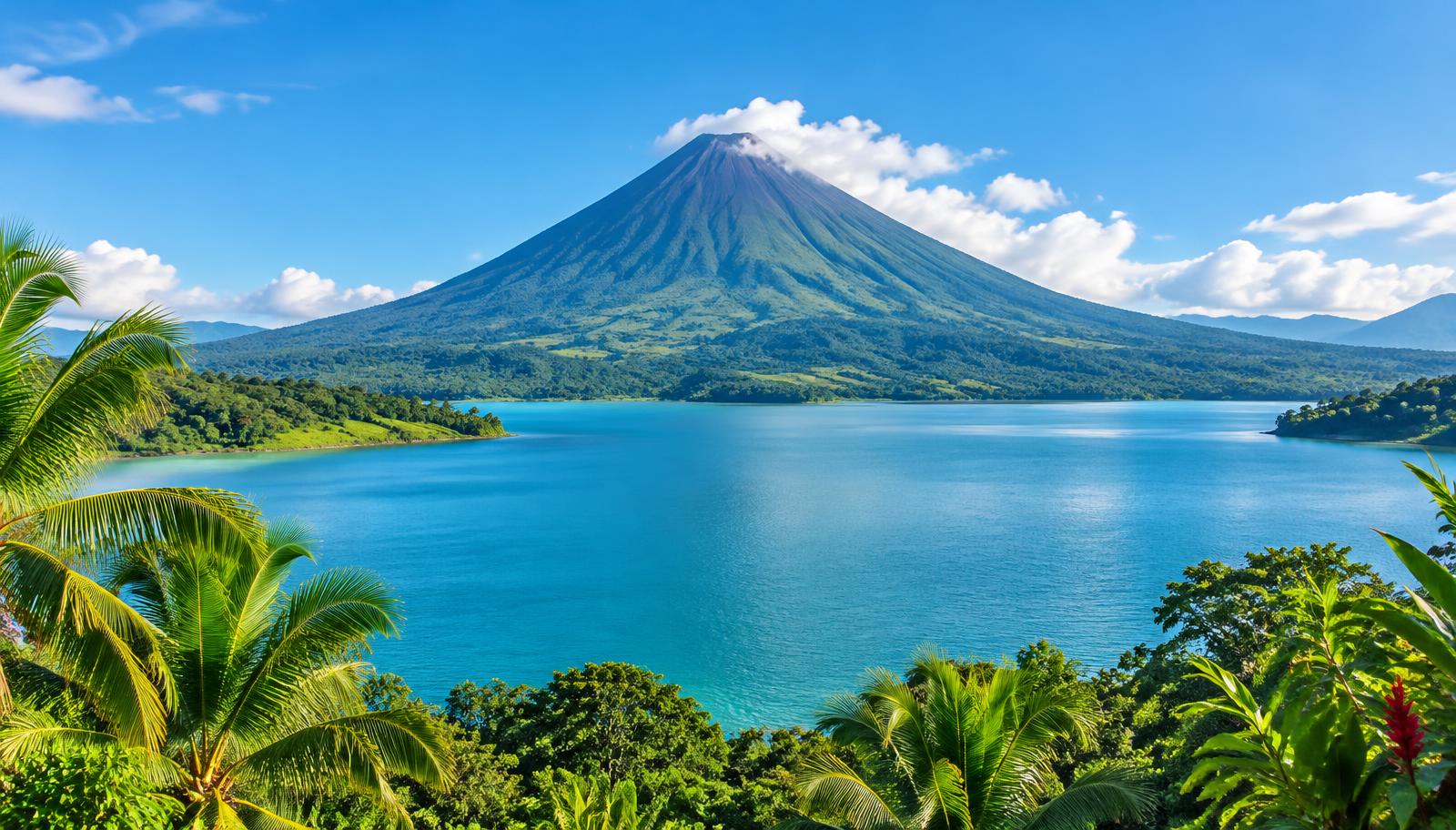
Featured image: AI-generated illustration inspired by Arenal Volcano and Lake Arenal, Costa Rica.