Best Beaches on Costa Rica’s Caribbean Coast: Puerto Viejo, Cahuita & Tortuguero Compared
By The Costa Rica List Editorial Team
Published · Last updated
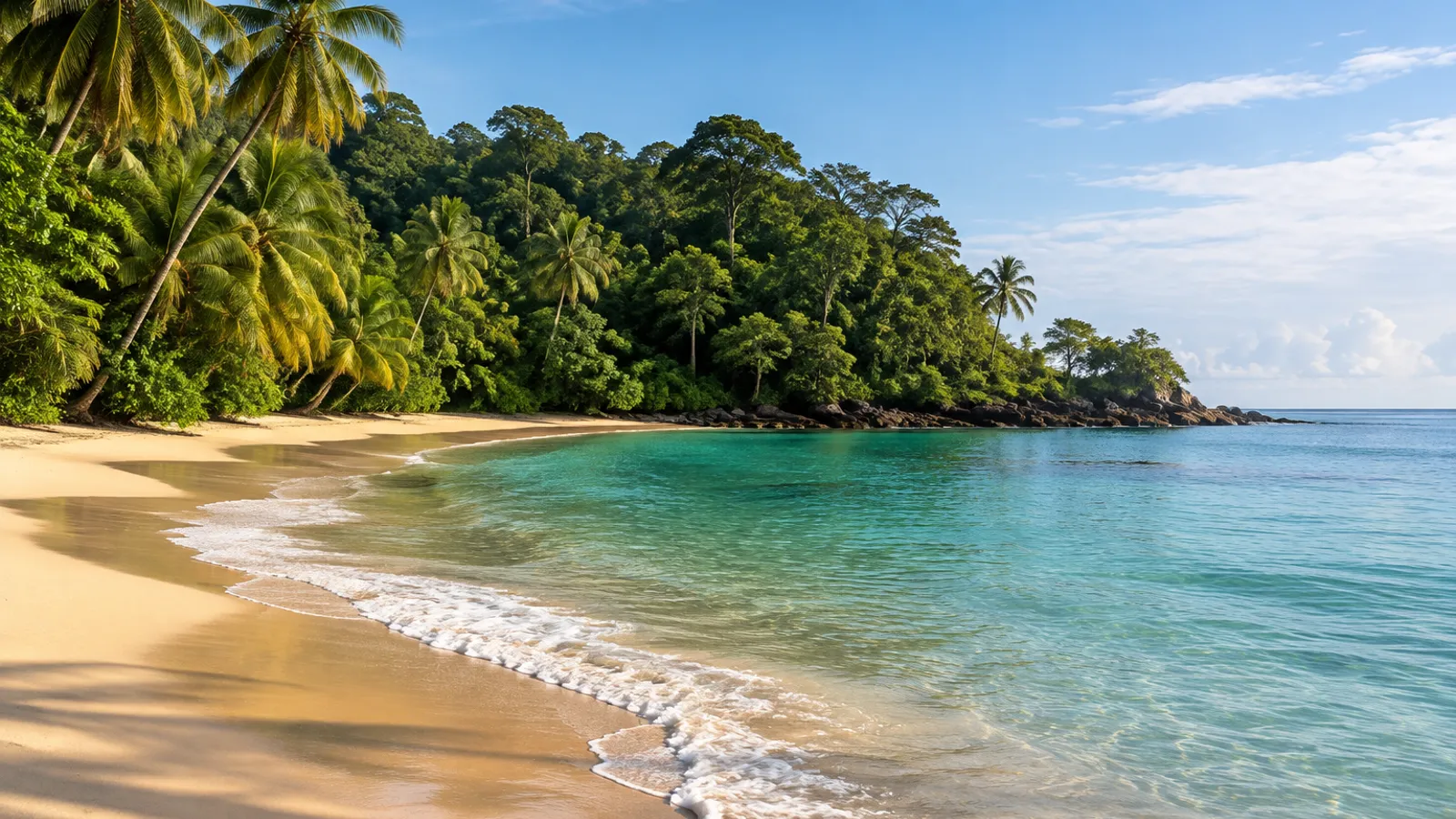
Most people picture the beaches of Costa Rica’s Pacific side, but the Caribbean coast is a different country in all but name: reggae and calypso, Afro-Caribbean cooking, and jungle that runs straight down to the sand. Where Pacific towns like Tamarindo, Jacó and Manuel Antonio are built around big resorts and busy surf breaks, the Caribbean side moves at a slower pace. The coast has three main destinations, Puerto Viejo, Cahuita and Tortuguero, and each has a distinct character, so choosing the right one shapes your whole trip.
| Puerto Viejo | Cahuita | Tortuguero | |
|---|---|---|---|
| Best for | Nightlife, surf, variety | Quiet, reef, easy hiking | Wildlife and turtles |
| Getting there | Road from San José | Road, just north of Puerto Viejo | Boat or small plane only |
| Roughly from San José | 4 to 4.5 hours by car | 3.5 to 4 hours by car | About 3 hours by car, plus 1 to 1.5 hours by boat |
| Car needed | No, bikes and buses | No | To reach the dock only |
| Swimming | Punta Uva, Manzanillo | Yes, reef protected | No, dangerous currents |
| Snorkelling | Limited | Living coral reef | No |
| National park | Nearby | From the town itself | The whole destination |
| Nightlife | The most on the coast | Very little | None |
| Cost | Moderate | Lowest of the three | Highest, lodge packages |
| Stay at least | 2 to 3 nights | 1 to 2 nights | 2 nights |
Looking for somewhere to stay? Browse hotels and lodges in Costa Rica, or see our best hotels in Costa Rica by region guide.
Getting to the Caribbean Coast
All three destinations are reached from San José via Route 32, which crosses Braulio Carrillo National Park to the port city of Limón.
From Limón the road continues south to Cahuita (about 3.5 to 4 hours from San José by car) and Puerto Viejo (about 4 to 4.5 hours, roughly 215 kilometres). Direct public buses to both towns leave from the Caribbean bus terminal in San José several times a day and take around five hours. Shuttle vans offer door-to-door transfers from San José and from the Arenal area.
Tortuguero has no road access. Most visitors drive or take a shuttle to the dock at La Pavona (about 3 hours from San José), park in a guarded lot, and take a 1 to 1.5 hour boat along the river and canals. Boats also run from Moín, near Limón, which suits travellers coming up from Puerto Viejo or Cahuita. Small planes fly from San José to Tortuguero’s airstrip in around 30 minutes.
Puerto Viejo: The Beating Heart of the Caribbean
Puerto Viejo is the most well-known and largest village on Costa Rica’s Caribbean coast, and for good reason.
Its full name is Puerto Viejo de Talamanca, which distinguishes it from Puerto Viejo de Sarapiquí in the northern lowlands. It has many of the country’s most enjoyable activities and attractions, including beaches, bars, restaurants and adventure tours. Two of the coast’s biggest wildlife draws are close by: the Jaguar Rescue Center at Playa Chiquita, which rehabilitates injured and orphaned animals, and the Sloth Sanctuary of Costa Rica just north of Cahuita.
The Beaches Around Puerto Viejo
Four beaches south of town stand out, each with a different character:
- Punta Uva — a long, narrow and peaceful beach with clear, calm water, and one of the best for swimming.
- Playa Cocles — home to stronger waves and the more developed beach, popular for surfing and surf lessons, but rip currents make it a poor choice for swimming.
- Playa Chiquita — a narrow and remote beach with dense jungle behind it.
- Manzanillo — a small village at the end of the road with untouched beaches, on the edge of the Gandoca-Manzanillo Wildlife Refuge.
Is Puerto Viejo Safe?
Yes, Puerto Viejo is generally safe for visitors, but stay aware of your surroundings at all times.
Violent crime against tourists is low, and petty theft is the main thing most travellers need to think about. Park your car in a guarded spot, don’t leave valuables on the beach, and secure your belongings as you would anywhere. For wider advice, read our guide on whether Costa Rica is safe for travellers.
Cahuita: Untamed and Slow-Paced
Cahuita is a laid-back town about 20 minutes’ drive north of Puerto Viejo, with even less nightlife and a strong Afro-Caribbean character.
Much like Puerto Viejo, its greatest appeal is a national park on its doorstep. Here you’ll find easily accessible beaches and flat trails through lush rainforest where you can spot monkeys, sloths and other wildlife.
Just north of town is Playa Negra, a long black-sand beach that is one of the most distinctive on the coast, quieter than anything around Puerto Viejo and backed by palms and jungle.
Cahuita National Park and the Reef
Cahuita National Park protects one of the few living coral reefs on Costa Rica’s Caribbean coast, which makes it a good place for beginner snorkelling.
The park entrance is at the edge of town, and the trail follows the shore past Playa Blanca, a reef-protected beach that is calm enough for swimming. Snorkelling trips to the reef must go with a licensed guide; just offshore you can see a variety of tropical fish and corals.
Tortuguero: The Remote Wildlife Sanctuary
Tortuguero can only be reached by boat or small plane, typically a 3-hour drive from San José to the La Pavona dock followed by a 1 to 1.5 hour boat ride.
The boat trip doubles as a wildlife tour through the canals. Once there, you are in a world of your own: the village sits between the sea and the canals of Tortuguero National Park, one of the most important nesting beaches for sea turtles in the western Caribbean. For more of the country’s highlights, see our guide to Costa Rica’s best natural wonders.
Do not swim at Tortuguero. The beach has dangerous currents and rip tides, there are no lifeguards, and the long dark-sand beach is protected nesting habitat rather than a sunbathing beach.
Outside nesting season, boat and canoe tours through the canals reveal an abundance of wildlife, including caimans, river otters, howler monkeys and hundreds of bird species. Lodges here are usually sold as packages with transfers and meals; compare options in our hotel listings.
Turtle Nesting Seasons
Green turtles nest at Tortuguero from July to October, and leatherbacks from roughly March to June.
- Green turtles: July to October, peaking in August. This is the main season and the one most visitors come for.
- Leatherback turtles: roughly March to June, peaking in April, in much smaller numbers.
Dates are from the Sea Turtle Conservancy’s Tortuguero monitoring programme. Nesting beaches can only be visited at night with a licensed guide under rules set by SINAC, Costa Rica’s national conservation agency.
Afro-Caribbean Culture and Food
Afro-Caribbean and Indigenous Bribri heritage is the single biggest reason to choose this coast over the Pacific.
Many families descend from Jamaican and other West Indian workers who arrived in the late 1800s to build the railway and work the banana plantations. You’ll hear Limonese Creole, an English-based language also called Mekatelyu, alongside Spanish, and calypso and reggae in the bars. Inland, the Bribri people of the Talamanca territories offer cacao and community tours that explain their traditions.
The food is genuinely different from the rest of the country. Look for rice and beans cooked in coconut milk, usually served with Caribbean-style chicken; rondón, a slow-cooked seafood and root vegetable stew in coconut milk; and patí, a spiced meat pastry sold by street vendors. Our Costa Rica food guide covers more regional dishes.
Cahuita vs Puerto Viejo: Which Should You Choose?
Choose Puerto Viejo for variety and nightlife, and Cahuita for quiet and the reef.
Choose Puerto Viejo if you want:
- More options for eating, drinking and places to stay along the beach
- Surf lessons or an evening out
- Easy access to Punta Uva, Playa Cocles and Manzanillo in one trip
Choose Cahuita if you want:
- A quieter, more secluded atmosphere
- Easy, flat hiking through a national park right from town
- Lower prices for lodging and food
Many visitors do both, staying in Puerto Viejo and taking a day trip to Cahuita National Park.
Weather and Best Time to Visit
The Caribbean coast’s driest spells are February to April and September to October; the wettest months are typically May to August and November to January.
This is close to the reverse of the Pacific side, where September and October are the wettest months of the year, and it catches out a lot of visitors planning their own itineraries. If you are combining both coasts, September and October are when the Caribbean is at its best. In October, Limón city also hosts its annual carnival, with parades and calypso music.
Temperatures are fairly consistent along the Puerto Viejo coast all year. Be prepared for high humidity, daily highs around 30°C (the mid-80s Fahrenheit) and frequent short thunderstorms, even in the drier months.
Frequently Asked Questions
Do I need a car to visit these beaches?
Not for Puerto Viejo or Cahuita, where most visitors get around by bike, bus or taxi. For Tortuguero a car is useful only to reach the boat: drive to La Pavona or Moín, park in a guarded lot, and take the boat for the last leg, because no road reaches the village.
Is it possible to make a day trip to Tortuguero from Puerto Viejo?
It is possible but not recommended, because the journey takes most of a day each way by road and boat. Stay at least one night, and ideally two. An overnight stay also gives you a much better chance of joining a guided night tour to watch turtle nesting in season.
Which beach is the best for swimming?
Punta Uva and Manzanillo are the best swimming beaches on the coast, with calm, clear water on most days. The reef-protected beach inside Cahuita National Park is another good choice. Playa Cocles has strong surf and rip currents, so it suits surfers better than swimmers.
Is the Caribbean coast more expensive than the North Pacific coast?
Generally no. Cahuita and Puerto Viejo are cheaper than the more built-up Pacific resort towns for both lodging and food. Tortuguero is the exception: its lodges are usually sold as packages that include boat transfers and meals, which pushes the average cost of a stay higher.
How far is Puerto Viejo from San José?
Puerto Viejo is about 215 kilometres from San José, roughly four to four and a half hours by car via Route 32 through Braulio Carrillo National Park and Limón. Direct public buses leave from the Caribbean bus terminal in San José several times a day and take around five hours.
When can you see turtles at Tortuguero?
Green turtles nest at Tortuguero from July to October, with the peak in August. Leatherbacks nest earlier, roughly from March to June, with the peak in April. Nesting beaches can only be visited at night with a licensed guide, and dates vary slightly each year, so check with a local operator before booking.