Is Costa Rica Safe? A Traveler's Guide for 2026
By Written by the editorial team at The Costa Rica List — Thu Sep 24 2026
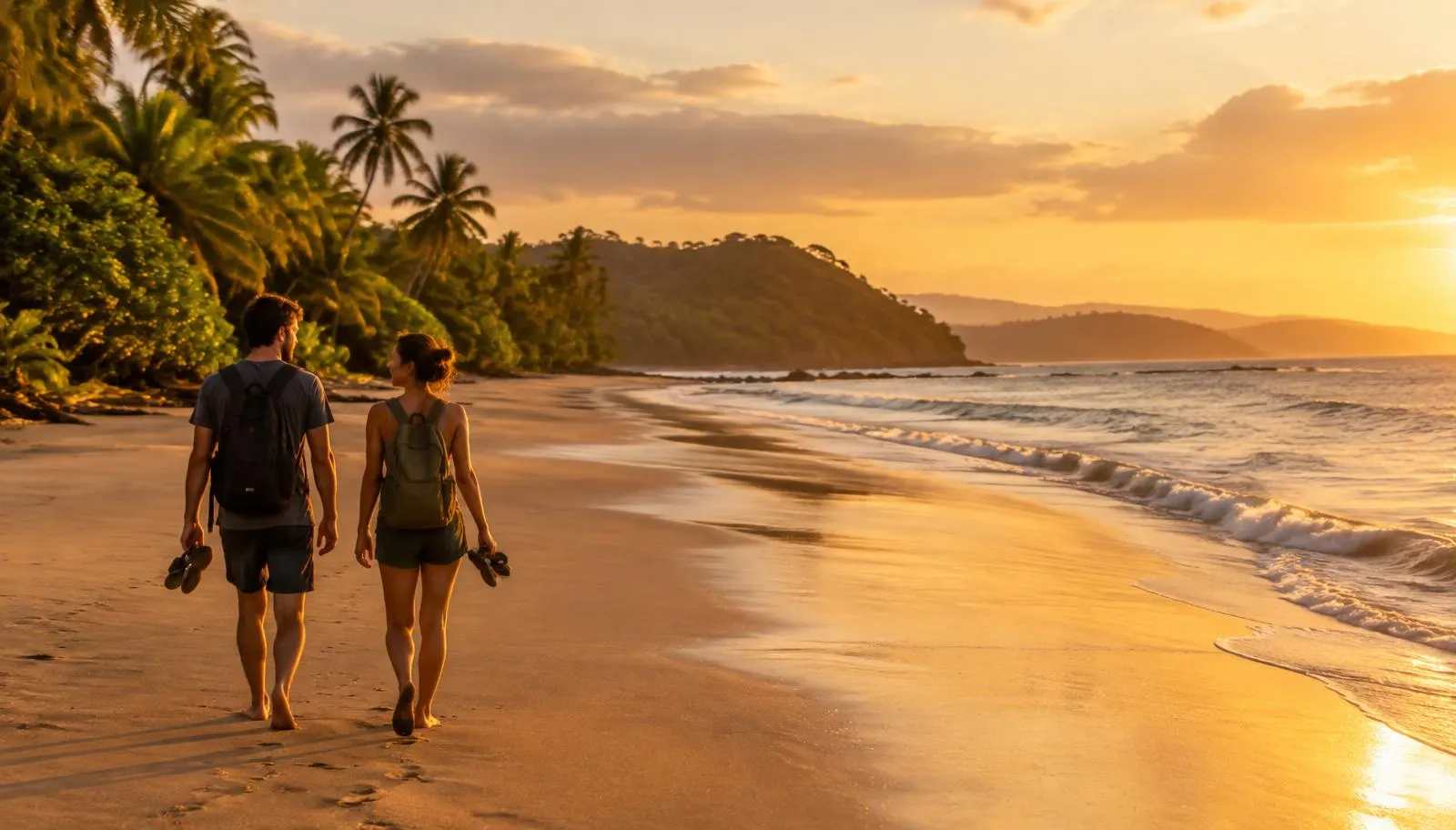
Is Costa Rica safe for tourists? Get the latest travel advisory, safety tips for beaches and jungles, San José safety info, and family travel advice.
Planning a trip to Costa Rica and wondering whether it is safe? The honest answer is broadly yes, and this guide explains precisely what to watch: what the official travel advisories say, which destinations need more care, the real risks in the ocean and on the road, and what to do if something goes wrong.
Published: 24 September 2026 · Last updated: 24 September 2026 · Advisory information last checked: 24 September 2026
Quick answer: yes, broadly. Costa Rica is one of the safer countries in Central America and most visits are trouble-free. The United States places it at Level 2, exercise increased caution, for crime. The two real risks are rip currents at unguarded beaches and theft from rental cars, not violence against tourists.
Is Costa Rica Safe for Tourists? The Short Answer
Broadly, yes. Millions of travelers visit Costa Rica each year for its beaches, wildlife, national parks and relaxed Pura Vida culture, and the great majority have a trouble-free trip. The country has had no army since 1948, has a long record of political stability, and tourism is central to its economy, so visitors are generally welcomed and well looked after.
That does not mean there is nothing to watch. The official guidance from the United States, the United Kingdom and Canada all point to the same thing: crime, mostly opportunistic theft, is the main concern, and it can be reduced with ordinary precautions. The other risk that travelers consistently underestimate is the ocean. With a few sensible habits, and an awareness of where you are, Costa Rica is a wonderful and welcoming place to travel.
Costa Rica Travel Advisory: What the Official Guidance Actually Says
These are the official government positions on Costa Rica as checked on 24 September 2026. Advisories can change at short notice, so always check the source page before you travel.
- United States (State Department): Level 2, "Exercise Increased Caution", due to crime. The advisory notes that petty theft is common and that violent crime, including armed robbery, also occurs. Level 2 is the second of four levels. Source: US State Department Costa Rica Travel Advisory, checked 24 September 2026.
- United Kingdom (FCDO): no advice against travel to any part of Costa Rica. The Foreign, Commonwealth & Development Office highlights street crime, theft from vehicles and strong ocean currents as the main issues for British visitors. Source: UK FCDO foreign travel advice: Costa Rica, checked 24 September 2026.
- Canada (Government of Canada): "Exercise a high degree of caution" due to crime. This is the second of Canada's four levels, and broadly equivalent to the US Level 2. Source: Government of Canada travel advice: Costa Rica, checked 24 September 2026.
What Level 2 actually means. Many readers see the words "increased caution" and assume a country is dangerous. It does not mean that. Level 1 is "exercise normal precautions", and Level 2 is the level the United States applies to many popular destinations with property crime, including much of Western Europe at various times. In plain language, it means: take the precautions you would take in any busy city, keep valuables out of sight, and be aware of your surroundings. It is not a warning against travel.
The practical takeaway is the same across all three governments: choose well-reviewed hotels and accommodation, use reputable transport, do not leave valuables unattended, and follow local guidance on the beach. The Costa Rican Tourism Board (ICT) also publishes official visitor information.
How Safe Is Costa Rica Compared to Its Neighbors?
Costa Rica is generally regarded as one of the safer and more stable countries in Central America. At the time of checking, the US State Department placed Costa Rica at Level 2, its northern neighbor Nicaragua at Level 3 ("Reconsider Travel"), and its southern neighbor Panama at Level 2 overall, with some remote border areas at higher levels.
That said, crime in Costa Rica has risen in recent years. Much of the increase in violent crime is linked to disputes between drug-trafficking groups and is concentrated in specific neighborhoods, particularly parts of San José and the province of Limón. It rarely involves tourists. For visitors, the realistic risks remain theft and the ocean rather than violence.
Where Is Safe and Where to Take More Care
Safety in Costa Rica varies by town, and within towns by time of day. The table below summarizes the main safety consideration in each of the destinations most visitors go to. Tap a destination to see local hotels, activities and services.
| Destination | Main safety consideration | Lifeguarded beach | Safe to walk at night | Rental car risk |
|---|---|---|---|---|
| San José | Pickpocketing and bag snatching downtown | Not applicable (inland) | Busy, well-lit areas only; take a taxi after dark | Moderate; use guarded parking |
| Tamarindo | Bag theft on the beach; nightlife-related petty crime | Limited, seasonal; check locally | Main strip, yes; take a taxi late at night | High at beach parking areas |
| Jacó | Strong rip currents; petty crime linked to nightlife | Limited; check locally | Main street, yes; avoid the beach after dark | High |
| Manuel Antonio | Rip currents at Playa Espadilla; theft at park parking | Some coverage at Playa Espadilla | Hilly, unlit road; use a taxi or shuttle | High at national park parking |
| Santa Teresa | Break-ins at rentals; powerful surf | No | Unlit dirt roads; carry a light or take a ride | High |
| La Fortuna | Car break-ins at trailheads; volcano and river trips | Not applicable (inland) | Town center, yes | High at trailheads and waterfalls |
| Nosara | Strong currents at Playa Guiones; burglary of rentals | No | Unlit roads; take a ride | Moderate |
| Flamingo | Low crime; boat and water-sports safety | No | Yes, in the quiet central area | Low to moderate |
| Playas del Coco | Nightlife-related petty theft | No | Central strip, yes; taxi late at night | Moderate |
| Dominical | Very strong rip currents | Limited; check locally | Village center, yes | High at beach parking |
San José and the Central Valley
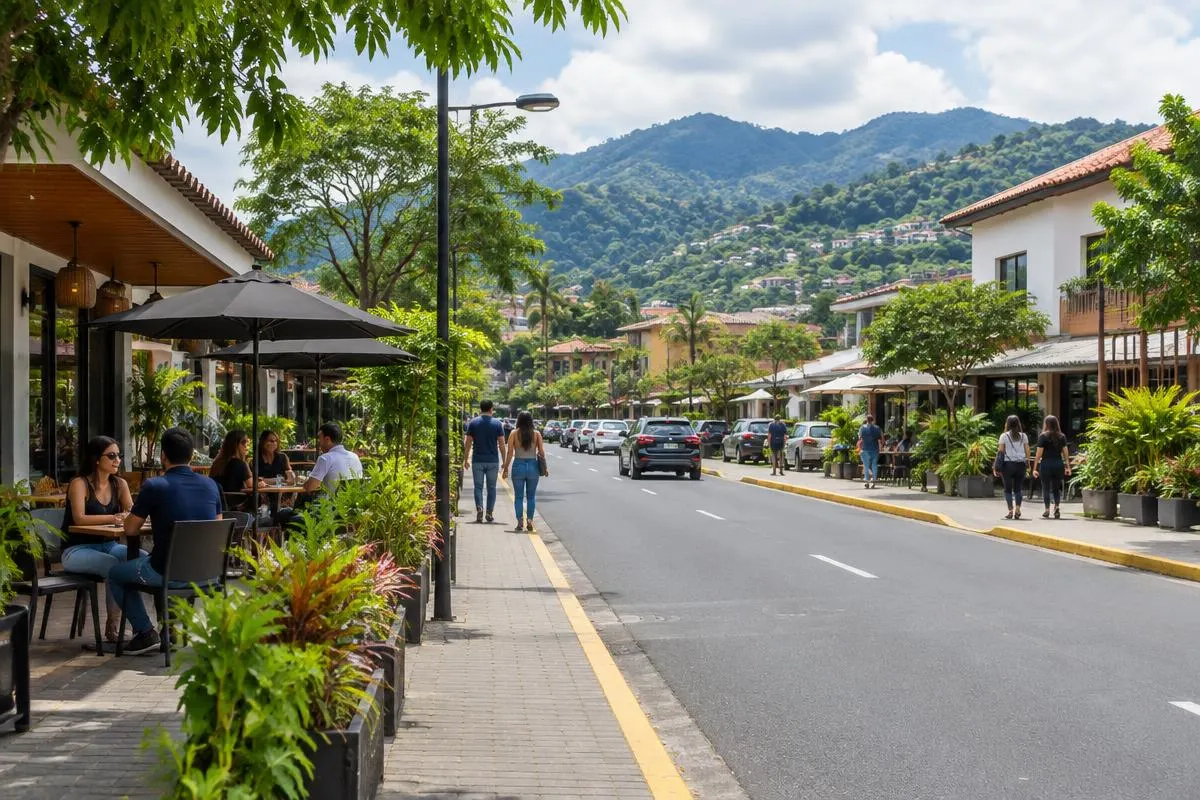
San José is the busiest place in the country and has the most street crime, mainly pickpocketing, bag snatching and phone theft in crowded areas and at bus stations. The downtown core is fine to explore by day with normal city awareness. After dark, the standard advice is to use a taxi or rideshare rather than walk. Suburbs such as Escazú and Santa Ana, west of the center, are among the most walkable and relaxed parts of the capital, and are where many visitors choose to stay.
The Beach Towns
Most of the Guanacaste and Nicoya beach towns, including Tamarindo, Flamingo, Playas del Coco, Nosara and Santa Teresa, are relaxed and welcoming. The main problems are opportunistic: bags and phones taken from the sand while their owners swim, and break-ins at rental houses and parked cars. On the central and south Pacific, Jacó has a livelier nightlife scene and more petty crime, while Manuel Antonio and Dominical are calm but have some of the strongest currents on the coast. On the Caribbean coast, Puerto Viejo and Cahuita are popular and friendly, with the same advice about valuables and night-time walking.
Areas Worth Extra Caution
Take more care, particularly after dark, in downtown San José around the bus terminals and in less-visited city neighborhoods, in the port city of Limón, and on quiet, unlit beaches at night in any town. Avoid walking alone on the beach after dark, and do not stop for strangers on isolated roads. None of this makes these places off-limits; it means planning transport in advance and keeping valuables out of sight.
The Biggest Real Risk: Rip Currents and Ocean Safety
Drowning, often caused by rip currents, is among the leading causes of death for foreign visitors to Costa Rica. A rip current is a narrow, fast-moving channel of water that flows away from the shore and can carry even strong swimmers out to sea. Most Costa Rican beaches have no lifeguards, so you are responsible for your own safety in the water.
Beaches known for strong currents include Playa Espadilla in Manuel Antonio, Jacó and nearby Playa Hermosa, Dominical, Playa Guiones in Nosara, Santa Teresa and Playa Cocles on the Caribbean coast. The calmer, more sheltered bays of Guanacaste, such as Playa Conchal, Flamingo and parts of Tamarindo, are generally better for relaxed swimming, but conditions change with the tide and the season. Swell and currents tend to be stronger in the rainy season; see our guide to Costa Rica's weather and seasons.
If you are caught in a rip current:
- Do not swim against it. Even strong swimmers become exhausted.
- Swim parallel to the shore until you are out of the current, then swim back in at an angle.
- If you cannot swim out of it, float, stay calm and signal for help by raising an arm and shouting.
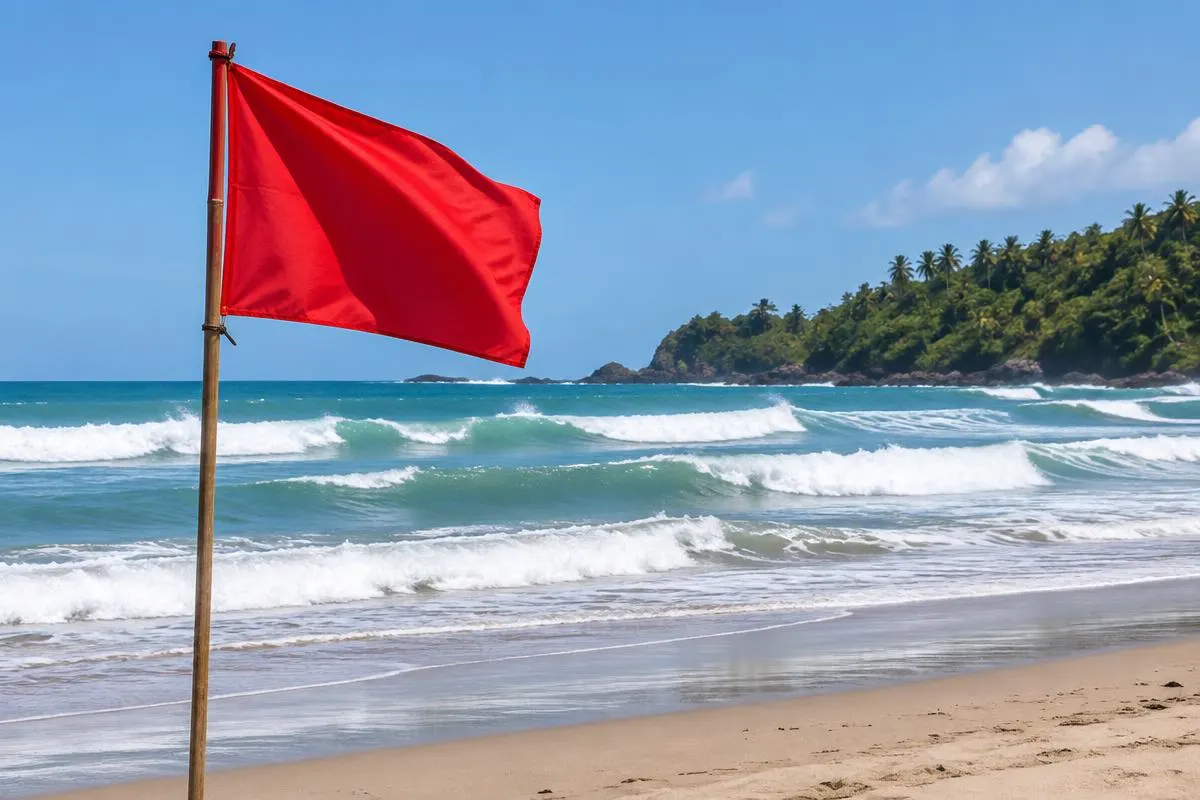
Before swimming, look for warning flags, ask your hotel or a local surf school about conditions, avoid swimming alone, after drinking or at dusk, and never swim near river mouths, where currents are strongest. Surfers should also read our guide to surfing in Costa Rica, which covers rip currents, surf etiquette and which breaks suit each skill level.
Crime, Theft and Scams to Know About
Three kinds of theft account for most problems visitors have: rental car break-ins at trailheads and beach parking areas, bag and phone theft on beaches while people swim, and opportunistic theft such as pickpocketing and bag snatching in San José. The countermeasures are specific and easy:
- Never leave anything visible in a parked car, even for a few minutes.
- Use your hotel safe for passports, spare cards and electronics.
- Carry a photocopy or photo of your passport rather than the original.
- Take only what you need to the beach, and keep an eye on your belongings while others swim.
- Keep your phone out of sight on busy streets and at bus stops.
Rental Car Break-ins
Thieves know that rental cars at trailheads, waterfalls and beach parking areas are likely to contain luggage, cameras and passports. Park in guarded lots where available (a small tip to the attendant is normal), leave nothing in the car or trunk, and check in to your accommodation before sightseeing on travel days so your luggage is not in the car. If you get a flat tire in an isolated area, drive slowly to a busy, well-lit place before stopping, as staged flat tires are a known tactic.
Common Scams
- Unmetered taxis. Official taxis are red with a yellow triangle on the door (airport taxis are orange). By law they must use the meter, known locally as the "maría". If the driver says it is broken, agree a price before setting off or choose another taxi.
- ATM skimming. Use ATMs inside banks or shopping centers, cover the keypad, and check for loose parts on the card slot.
- Unlicensed tour operators. Street touts may offer cheap tours with no insurance or certified guides. Book through licensed, well-reviewed operators instead.
- Currency confusion. Prices are often quoted in US dollars, but change may be given in colones at a poor exchange rate. Know the current rate and check your change.
Costa Rica Travel Safety Tips Before You Pack
- Take a small personal medical kit. Long travel days and winding mountain roads often call for motion sickness tablets, antihistamines and any personal medication.
- Use an insect repellent containing DEET or picaridin, particularly in the humid lowlands and rainforest. Dengue fever is present in Costa Rica, especially on the Caribbean coast and in the Pacific lowlands during the rainy season, and repellent is the main protection.
- Buy travel insurance that covers medical expenses, evacuation and any adventure activities you plan to do, such as zip-lining, rafting or diving.
- Bring quick-drying, layered clothing. Temperatures can go from hot to cold within a few hours in the mountains.
- Pack reef-safe sunscreen for snorkeling.
- Download offline maps for areas with poor mobile coverage.
- If you plan to rent a car, note that mandatory third-party liability insurance is required by Costa Rican law and cannot be replaced by credit card coverage. Compare car and vehicle rental services and confirm the full insurance cost before booking.
- Tap water is considered safe to drink in San José, the Central Valley and most established tourist towns, including La Fortuna, Monteverde and the main Guanacaste beach towns. In remote rural areas and some parts of the Caribbean coast and the Osa Peninsula, drink bottled or filtered water.
Safety on Jungle, Volcano and River Trips
The Pacific coast and the rainforests offer spectacular settings for adventure, and a few habits make each one safer.
- In the jungle or rainforest. Wear long sleeves and closed-toe shoes on every hike, particularly in humid regions, and use insect repellent. Watch where you put your hands and feet, as venomous snakes live in the forest. A licensed guide will improve both your safety and your chances of seeing wildlife; read our Costa Rica wildlife guide and our Corcovado National Park guide, where a certified guide is required.
- Around volcanoes. Restricted zones around active volcanoes exist for good reason. Stay on marked trails, viewpoints and designated areas, and check park notices before you go. Our guides to La Fortuna and Arenal and the Irazú Volcano day trip cover what to expect.
- On the river. Rafting and tubing operators grade rivers by difficulty. Choose a grade that matches your experience and fitness, and always wear the life jacket and helmet provided.
- Weather. Trail and river conditions can change quickly, particularly in the rainy season afternoons. Check the forecast before heading out and turn back if conditions worsen.
How to Book Adventure Activities Safely
If you love an adrenaline rush, Costa Rica is one of the best places in the world for it. The right choices before you book remove most of the unnecessary risk.
- Book with licensed, well-reviewed operators. Compare vetted local operators for zip-lining and canopy tours, white-water rafting, diving and snorkeling, surf lessons and guided tours. Ask whether the operator is registered with the ICT and carries insurance.
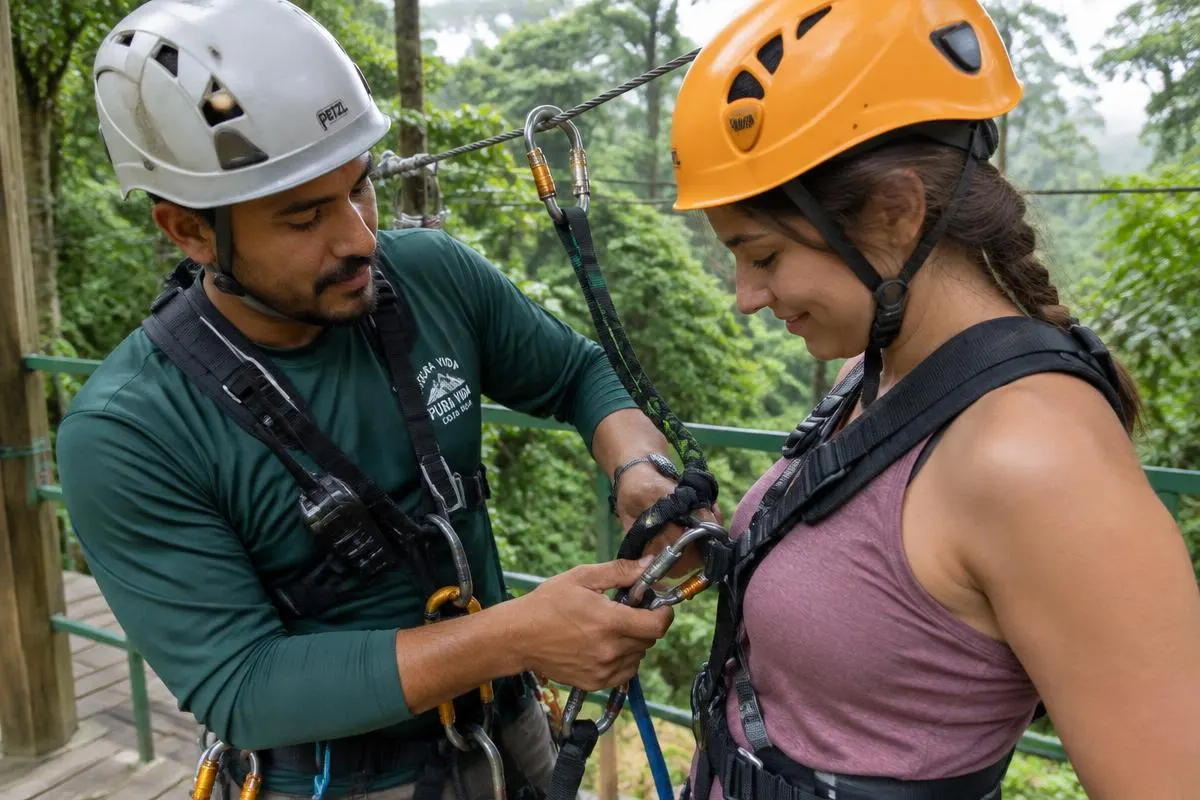
- Check the equipment. Reputable operators supply and inspect harnesses, helmets and life jackets, and give a safety briefing before you start.
- Carry your medical kit and insurance details on every excursion, including day trips.
- Never disturb or feed wildlife. It is illegal in national parks and can cause bites and injuries.
- Pace yourself and stay hydrated, especially on long hikes in the heat.
- Trust your instincts. If a situation or operator does not feel right, do not hesitate to leave and choose something else.
Is Costa Rica Safe for Solo Female Travelers?
Costa Rica has a strong reputation with solo travelers, including women traveling alone, and many visit every year without problems. The well-established tourist trail, friendly locals and large community of travelers make it one of the easier countries in the region to explore on your own.
The practical layer matters, though. Catcalling and unwanted comments happen, particularly in cities; ignoring them and walking on is the usual approach. Use official taxis, pre-booked shuttles or rideshare after dark rather than walking alone, and avoid empty beaches at night. Choose accommodation with good recent reviews from other solo women, a staffed reception or secure entry, and a central location. Watch your drink in bars, share your plans with someone at home, and consider group tours or shared shuttles for longer journeys.
Is Costa Rica Safe for Families?
Yes, Costa Rica is one of the most popular family destinations in Latin America. Children are welcomed everywhere, and there is a wide range of family-friendly hotels and guided tours suitable for younger travelers.
- Water safety first. Choose calmer beaches, swim only where conditions are known, and supervise children closely, as most beaches have no lifeguards.
- Sun and insects. The tropical sun is strong; use high-factor sunscreen, hats and repellent suitable for children.
- Car seats. Child car seats are required by law. Request them in advance from your rental company or shuttle operator.
- Age limits on activities. Zip-lining, rafting and some tours have minimum ages or heights. Check with the operator before booking.
- Wildlife. Teach children not to touch or feed animals, including the monkeys that approach visitors in Manuel Antonio.
Emergency Numbers and What to Do If Something Goes Wrong
- Emergency number: 911. This single number connects to police, ambulance and fire services across Costa Rica. Operators can usually connect you to an English speaker.
- Tourist Police. Costa Rica has a dedicated Tourist Police (Policía Turística) in major tourist areas. They can be reached through 911.
- Reporting theft. Report crimes to the OIJ (Organismo de Investigación Judicial), the judicial investigation police. You will need a police report for insurance claims.
- Hospitals. The public health system, run by the Caja Costarricense de Seguro Social (CCSS), treats emergencies for everyone. Many visitors use private hospitals, such as Hospital CIMA in Escazú, Hospital Clínica Bíblica and Hospital Metropolitano in San José, which have English-speaking staff and will usually require payment or insurance details up front. Find local clinics and doctors in our healthcare services directory.
- US Embassy: Calle 98, Vía 104, Pavas, San José.
- British Embassy: Edificio Colón, Paseo Colón, San José.
- Canadian Embassy: Oficentro Ejecutivo La Sabana, Sabana Sur, San José.
Check your own government's travel advice page for embassy phone numbers and out-of-hours emergency lines before you travel.
Costa Rica Safety FAQs
Is San José, Costa Rica safe?
San José is safe for most visitors who take ordinary city precautions, but it has the most street crime in the country, mainly pickpocketing, bag snatching and phone theft. The US State Department's Level 2 advisory applies to the capital. Neighborhoods such as Escazú and Santa Ana are among the most walkable, and taking a taxi after dark is the standard advice.
How safe is Costa Rica overall?
Costa Rica is one of the safer countries in Central America. The United States rates it Level 2, "Exercise Increased Caution", compared with Level 3 for neighboring Nicaragua. Violent crime has risen in recent years but is concentrated in specific areas and rarely involves tourists. The main risks for visitors are opportunistic theft and strong ocean currents.
Is Costa Rica safe at night?
It depends on the town. Busy central areas of most tourist towns are generally fine in the evening, but quiet streets, unlit roads and empty beaches are best avoided after dark. The standard advice is to use pre-arranged transport, official taxis or rideshare at night rather than walking.
Are the roads in Costa Rica safe to drive?
The main highways are in reasonable condition, but many rural roads are unlit, poorly marked and have hazards such as potholes, landslides and one-lane bridges. Some routes include river crossings that need a 4x4. Driving unfamiliar rural roads after dark is strongly discouraged. Mandatory third-party liability insurance is required on all rental cars.
Is the tap water safe to drink in Costa Rica?
Tap water is considered safe in San José, the Central Valley and most established tourist towns, including La Fortuna, Monteverde and the main Guanacaste beach towns. In remote rural areas and some parts of the Caribbean coast and the Osa Peninsula, drink bottled or filtered water.
Is it safe to hike alone in Costa Rica?
Hiking alone on short, well-marked and busy trails is generally fine in daylight, provided you tell someone your plans and carry water and a charged phone. For remote or longer trails, and anywhere with wildlife or changeable weather, hiking with a licensed guide is safer, and a certified guide is required in Corcovado National Park.
What should I do in a medical emergency in Costa Rica?
Call 911 for an ambulance. Public CCSS hospitals treat emergencies for everyone, and private hospitals in and around San José, such as Hospital CIMA, Clínica Bíblica and Hospital Metropolitano, offer English-speaking care but usually require payment or insurance details. Travel insurance that covers medical treatment and evacuation is strongly recommended.
The Honest Summary
Costa Rica is one of the safer countries in the region, and the overwhelming majority of visits are trouble-free. The real risks are the ocean and opportunistic theft, not violence against tourists. The precautions are ordinary ones: respect the currents, keep valuables out of sight, and plan your transport after dark. With those in place, you can plan your trip with confidence; our 10-day Costa Rica itinerary is a good place to start.
Read next
- Costa Rica Weather & Seasons Explained — when rain, swell and road conditions change, and the best time to visit each region.
- The Ultimate Costa Rica Itinerary: 10 Days — a day-by-day route covering volcanoes, rainforest and beaches.
Written by the editorial team at The Costa Rica List.