Surfing in Costa Rica: Best Breaks for Beginners to Pros
By Written by the editorial team at The Costa Rica List — Tue Sep 29 2026
Where to surf in Costa Rica by skill level, from beginner waves at Nosara and Tamarindo to the long left at Pavones. Seasons, safety and lesson advice.
Warm water all year, two coastlines and a wave for every level: surfing in Costa Rica works as well for a first lesson as it does for a serious surf trip. This guide sets out where to surf by skill level, when each coast is at its best, how to stay safe in the water and what lessons and board rental typically cost.
Published: 29 September 2026 · Last updated: 29 September 2026 · Conditions and prices last checked: 29 September 2026
Quick answer: beginners should head to Nosara or Tamarindo, where the waves are gentle and sand-bottomed and surf schools are everywhere. Santa Teresa suits improvers. Pavones, one of the longest left-hand waves on earth, is for advanced surfers only.
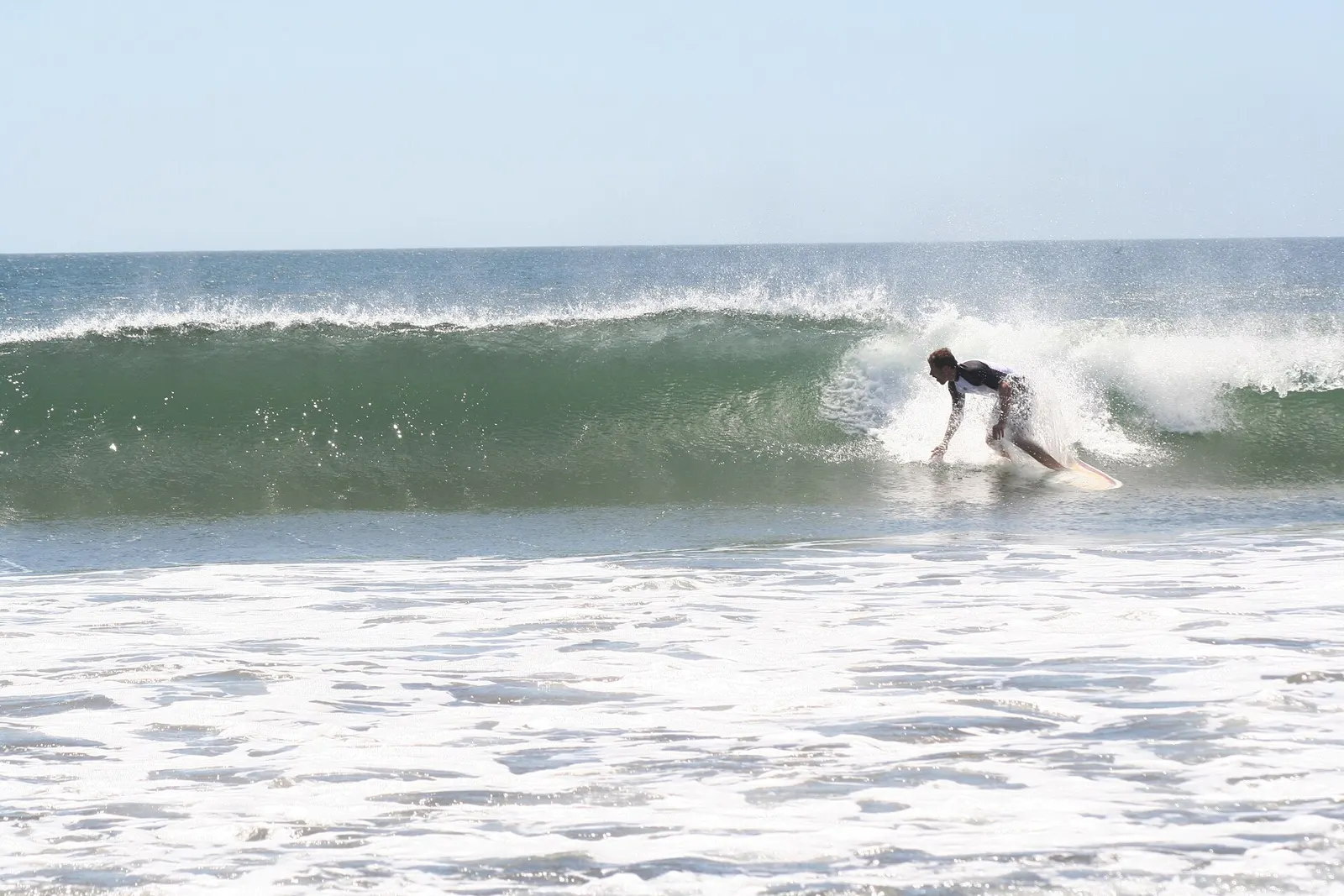
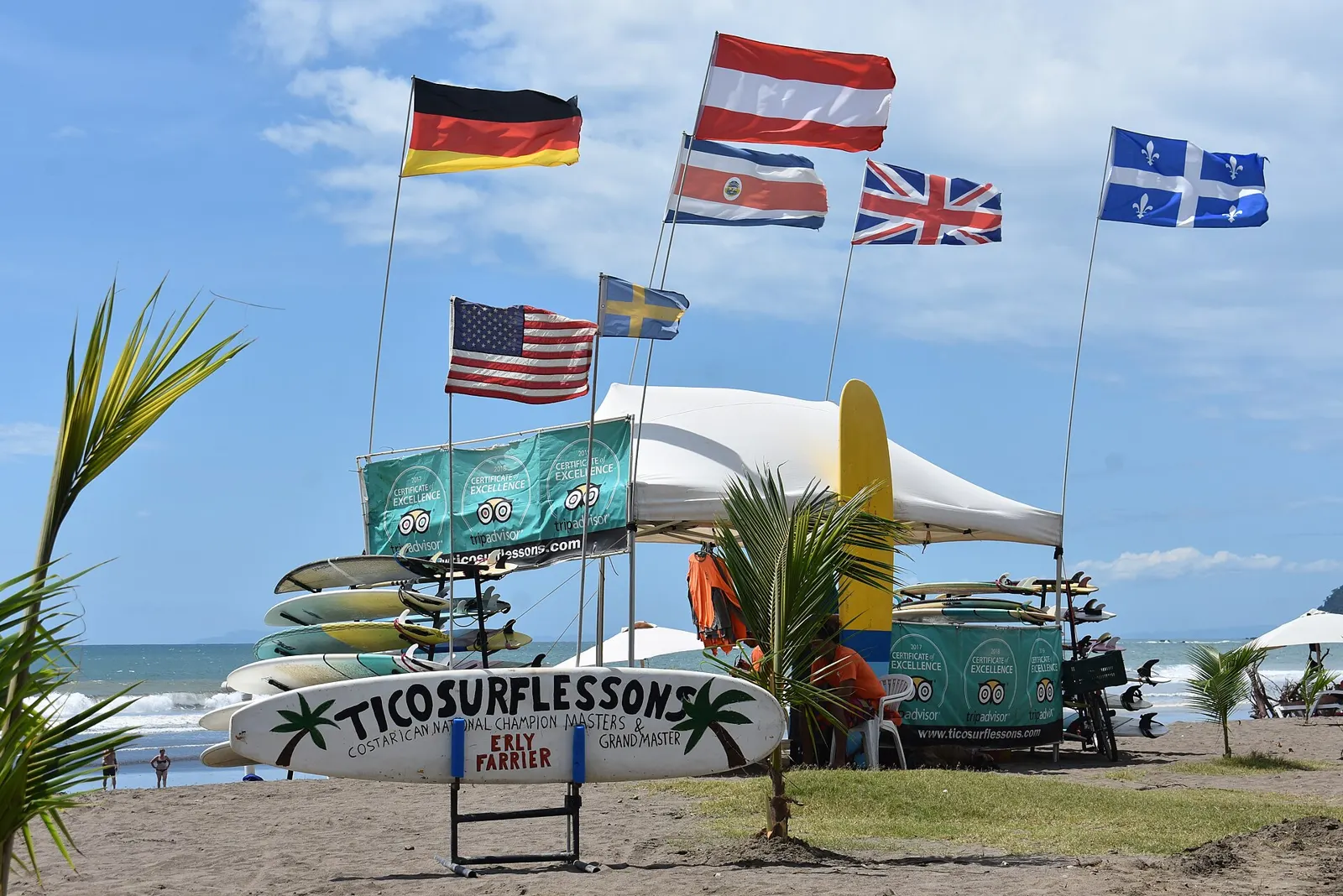
Warm water year round and waves for every level, from first lesson to the longest left in the Americas. Photo: dog4aday, Roca Bruja, Guanacaste, CC BY 2.0.
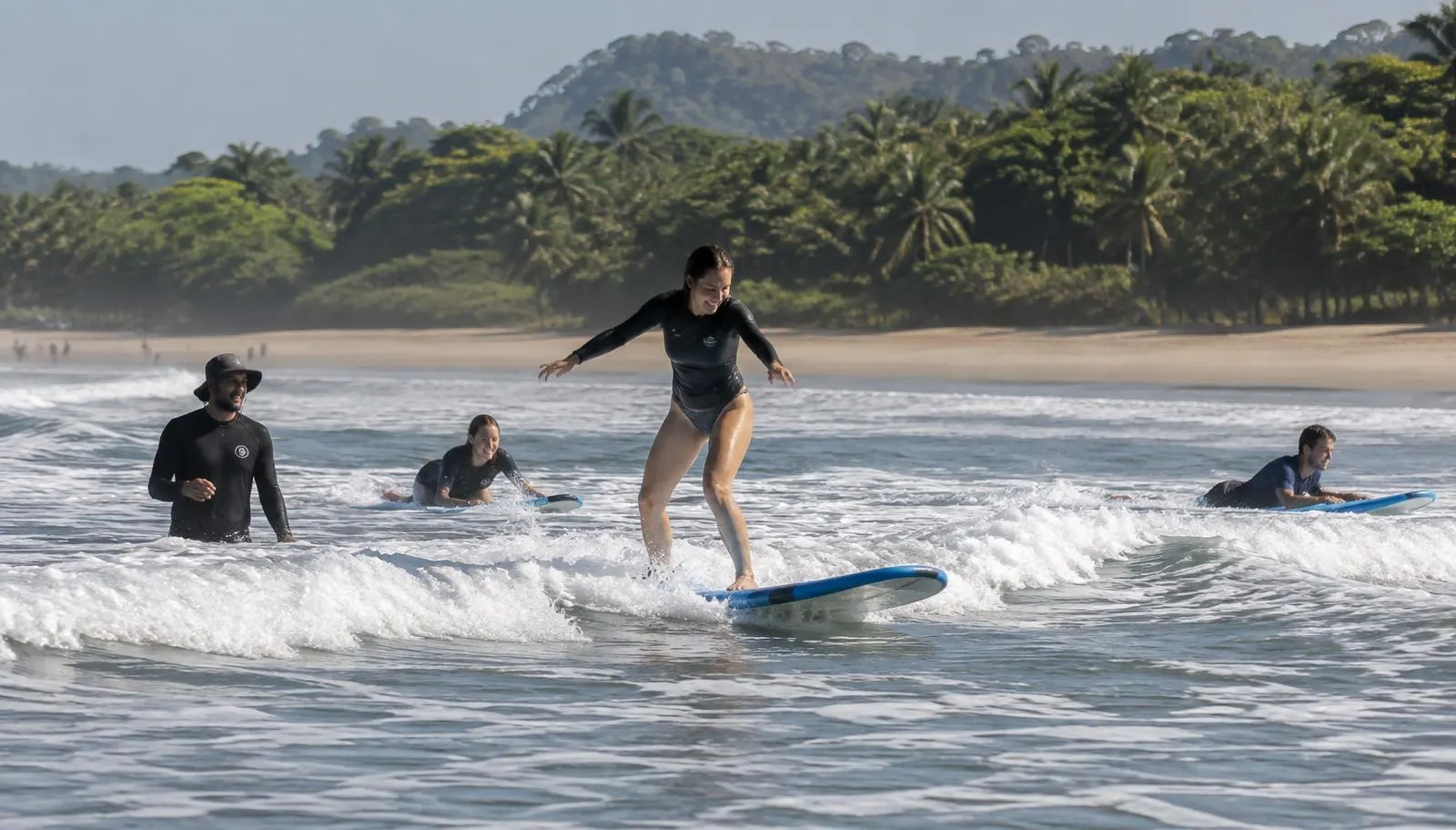
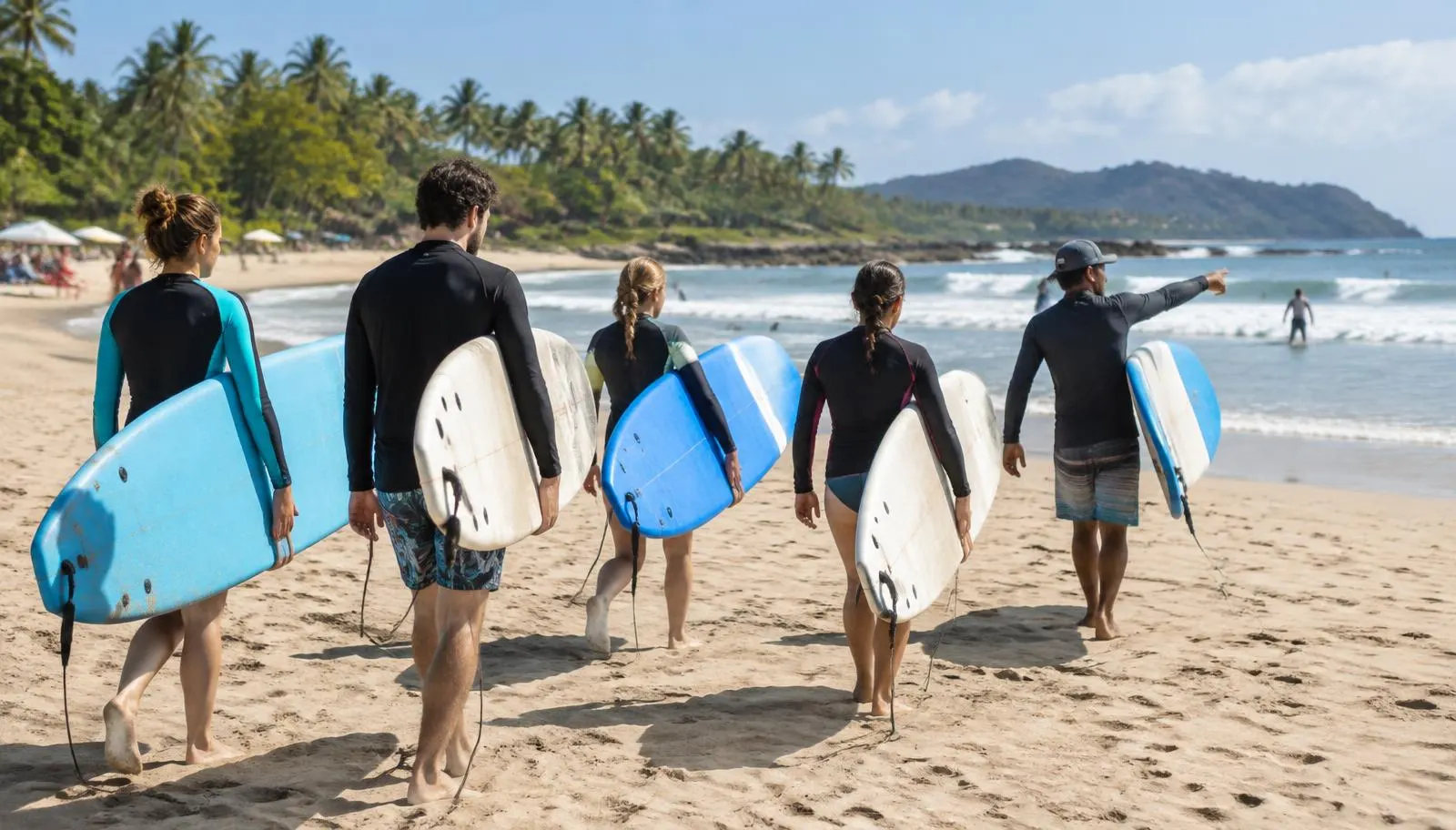
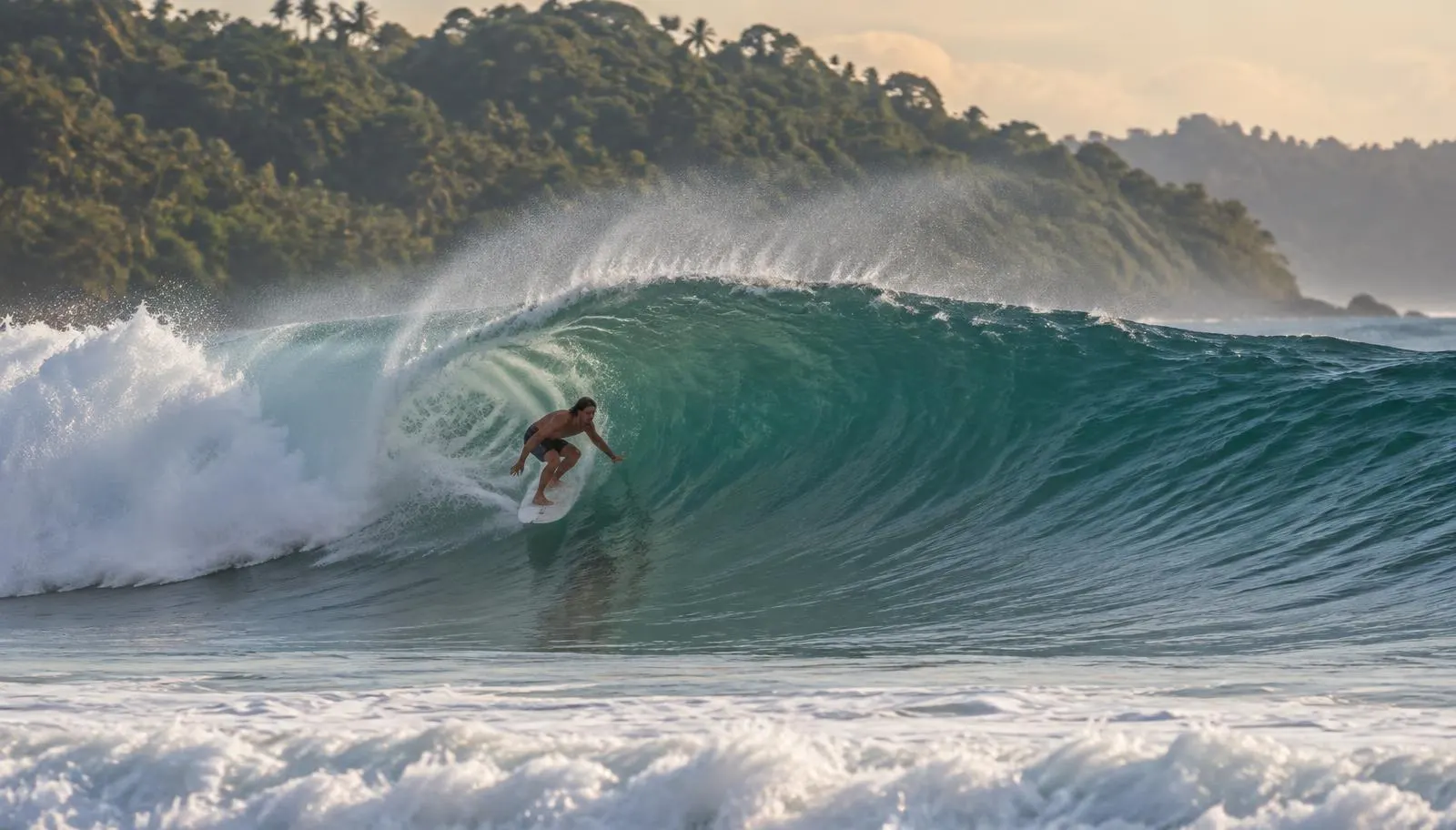
Both of Costa Rica's coasts have warm water all year and a laid-back culture that makes surfing more than just an activity. The water on the Pacific side sits at roughly 27 to 30°C, so you do not need a wetsuit anywhere in the country; a rash guard for sun protection is all most surfers wear. Surf schools, board rental and lessons are available in every major surf town, and the directory lists local surf schools, guides and board rental operators across both coasts. The breaks in this guide are ordered by difficulty, from the gentlest beginner waves to the most demanding. Use the table to match a break to your level and your travel dates. Prices and rental availability are indicative and change each season. The breaks below run from easiest to hardest. Each one states its skill level up front. If you are a beginner, stop at Jacó, and read the safety section below before you paddle out. Nosara is one of Costa Rica's best places to learn to surf. The main break at Playa Guiones offers a long stretch of sandy bottom with waves that break gently. It is excellent for learning to paddle, pop up and read the ocean, and there is room to spread out. Nosara has a high number of surf schools with experienced staff who go the extra mile for total beginners. The town has a slower pace and a stronger wellness scene than Santa Teresa, and it sits within the Nicoya Peninsula, one of the world's Blue Zones. Many visitors take lessons and stay at local surf-focused guesthouses and hotels, so take a look at local surf guiding and lesson listings to secure a good instructor before you go. Tamarindo is the best-known beginner surf town in the country. The long, sandy main beach has soft, forgiving waves through much of the year, and schools line the sand. It is also the easiest surf town to reach from Liberia airport, with plenty of restaurants and nightlife once you are out of the water. Crowds are heavy in the December to April high season, so book lessons ahead. For the nearby coastline, see our guide to the best beaches in Guanacaste. Santa Teresa, on the southern tip of the Nicoya Peninsula, has become one of the most popular surf towns in the country. Its consistent, more powerful waves suit surfers who want to build confidence on bigger surf. In the morning the waves are clean; in the afternoon the onshore wind usually spoils conditions, so surfers get out early. Santa Teresa leans towards intermediate surfers, though improvers can find softer sections at lower tides. With the town's growth there are accommodation options ranging from budget hostels to higher-end surf resorts. Check out local surf shops to rent gear before you head out, and read our full Santa Teresa and Mal País guide. Jacó is the closest surf town to San José, which makes it the default first stop for anyone arriving without a plan. The main beach has consistent, mostly forgiving waves, and schools and rental stands run the length of it. A few minutes south, Playa Hermosa is a different proposition: a fast, powerful beach break that hosts competitions and suits confident intermediates and advanced surfers. Both beaches have strong rip currents, so read the safety section before you go.Which Costa Rica Surf Break Is Right for You
Break Skill level Wave type Best months Nearest town Board rental Lessons available Playa Guiones Beginner Sandy beach break Year round; bigger April to October Nosara Yes, plentiful Yes, many schools Playa Tamarindo Beginner Sandy beach break, river mouth Year round; best December to April for beginners Tamarindo Yes, plentiful Yes, many schools Santa Teresa Intermediate (softer sections for improvers) Beach break with reef points April to November; mornings year round Santa Teresa / Mal País Yes Yes Jacó Beginner to intermediate Sandy beach break Year round; bigger April to October Jacó Yes, plentiful Yes Playa Hermosa (Jacó) Intermediate to advanced Powerful beach break April to October Jacó Yes, in Jacó Limited; coaching for improvers Pavones Advanced only Long left-hand point break over rock April to October, on large south swells Pavones / Golfito Limited Very few; guided sessions Salsa Brava Advanced only Shallow, heavy reef break December to March Puerto Viejo de Talamanca Yes, in Puerto Viejo Beginner lessons at nearby beaches only Where to Surf in Costa Rica, Break by Break
Nosara and Playa Guiones: Best for Beginners
What the wave is like
A town built for learning to surf
Tamarindo: Best for First-Time Lessons
Santa Teresa: Best for Progressing Surfers
What the wave is like
Who it's best for
Jacó and Playa Hermosa: Best for Intermediates
Pavones: Best for Advanced Surfers
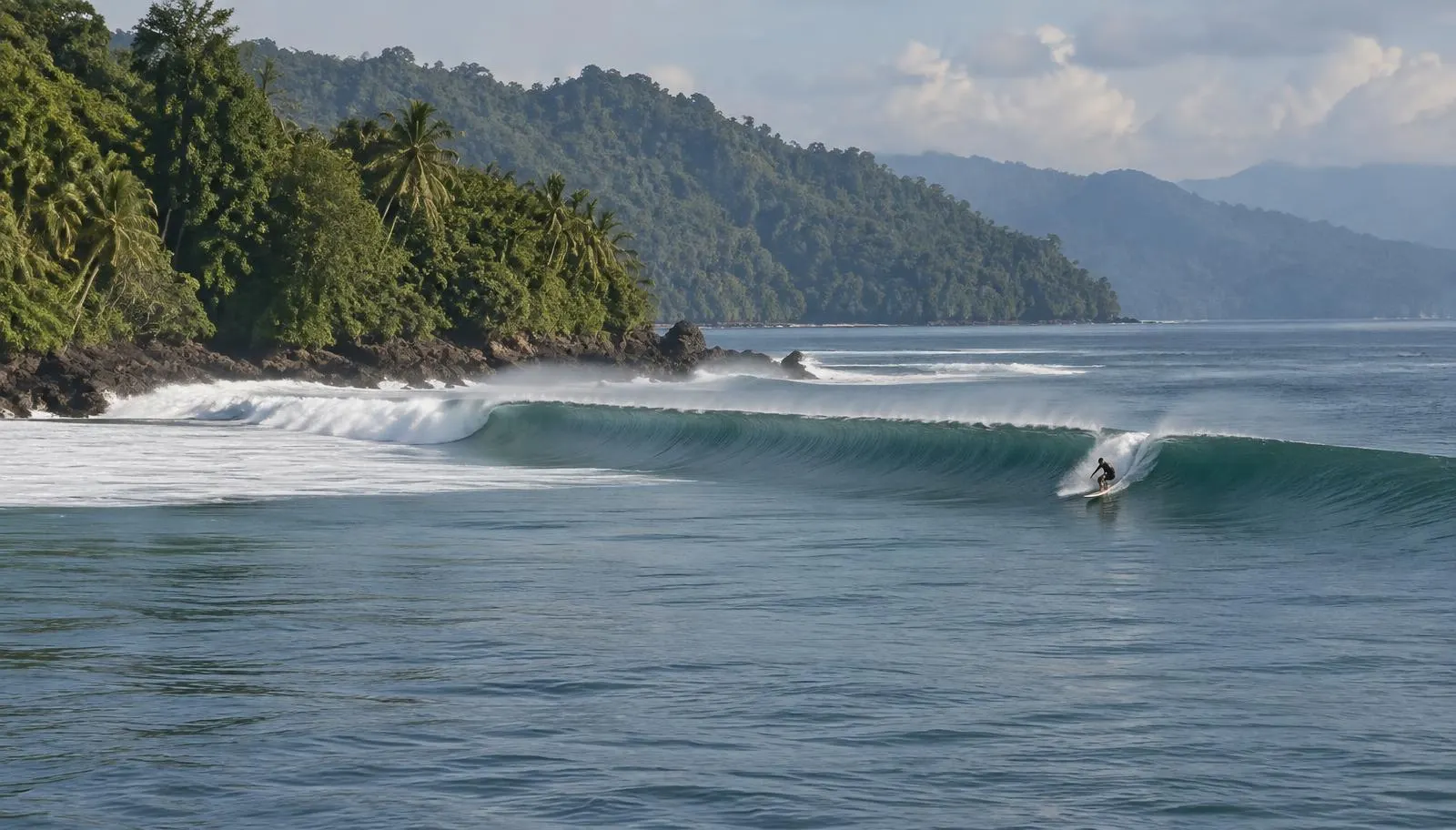
One of the longest left-hand waves on earth
On the southern Pacific coast near the Panama border, Pavones is one of the longest left-hand waves on the planet. On a good south swell, rides of several hundred metres are possible. It is remote, powerful and fast, and it only really works when a large swell arrives, so check the forecast before committing to the journey.
Remoteness and planning for Pavones
Pavones is built for experienced surfers who want a real test. It is one of the hardest places in Costa Rica to reach, services are basic and there are few surf shops, so plan to bring your own board. A guided trip will help you read the currents and the lineup. Before your trip, booking a Pavones surf guiding service is an absolute must.
The Caribbean Side: Salsa Brava and Puerto Viejo
Skill level: advanced only. Salsa Brava, just off Puerto Viejo de Talamanca, is Costa Rica's most famous reef wave: a heavy, hollow right that breaks over shallow coral, best from December to March. It is about 4 to 4.5 hours by road from San José. Beginners can take lessons at gentler beaches nearby, such as Playa Cocles, but should leave Salsa Brava to experienced surfers.
When to Surf in Costa Rica
There is surf somewhere in Costa Rica every month of the year. The seasons differ by coast:
- Pacific coast, April to October (green season): the biggest and most consistent south swells. Best for Santa Teresa, Playa Hermosa and Pavones. Mornings are usually clean, with afternoon rain.
- Pacific coast, December to April (dry season): smaller, cleaner waves and offshore winds in Guanacaste. Ideal for beginners at Tamarindo and Nosara, but beaches and lineups are at their busiest.
- Caribbean coast, December to March: the main season for Salsa Brava and Puerto Viejo, driven by winter swells in the Caribbean.
- September and October: the wettest months on the Pacific side. Swell is often good and crowds are lowest, but some roads can be difficult.
Check a surf forecast such as Surf-Forecast.com before each session. For rain, heat and regional weather, see our guide to the best time to visit Costa Rica.
Safety First: What to Know Before You Paddle Out
Read this before you paddle out. The ocean in Costa Rica is warm and inviting, but it is powerful, and drowning is one of the leading causes of death among foreign visitors. Our full guide to whether Costa Rica is safe covers ocean safety in more detail.
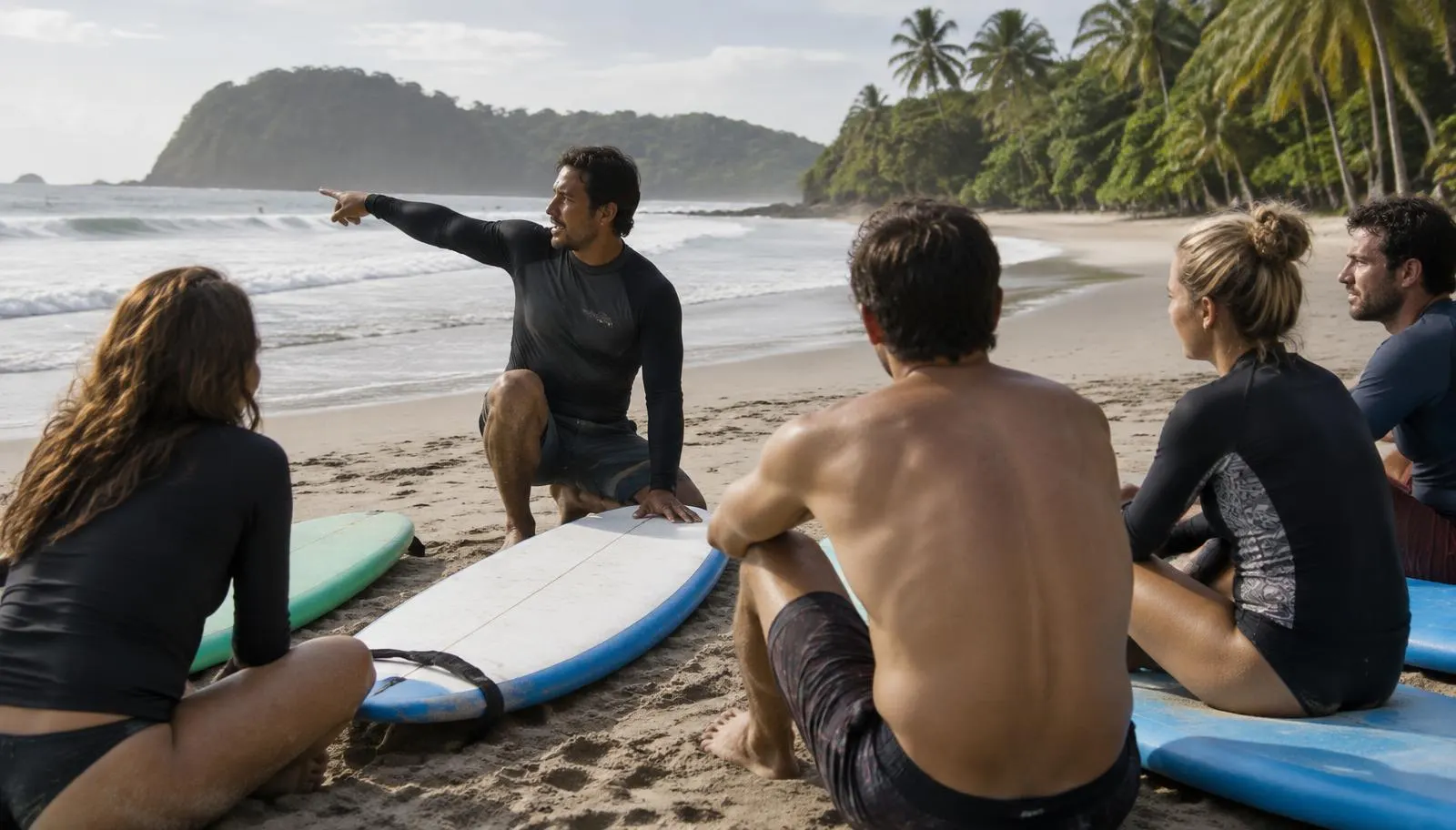
Most Costa Rican beaches have no lifeguards. A small number of busy beaches, such as Playa Jacó, Playa Espadilla at Manuel Antonio and parts of Tamarindo, have some lifeguard cover through local programmes, but coverage is limited, seasonal and varies from year to year. Do not plan around it. Instead, surf near a surf school or with an operator who is watching the water, especially as a beginner.
- Check the swell size and the tide before you go. Several breaks are safe for beginners only at certain tides.
- Never surf a break for the first time on your own, and never surf Pavones or Salsa Brava alone.
- Avoid river mouths, where currents are strongest and water quality can be poor after rain.
- The sun near the equator is intense even when it is overcast. Wear a rash guard and reapply reef-safe sunscreen often.
Rip Currents and How to Get Out of One
A rip current is a narrow channel of water flowing away from the shore. It can carry even strong swimmers out to sea. Look for a darker, calmer-looking gap between breaking waves, often with foam or debris drifting outwards. If you are caught in one, do not paddle or swim against it. Stay on your board if you have it, move parallel to the shore until you are out of the current, then come back in at an angle. If you cannot get out, float, stay calm and raise an arm to signal for help. This is the advice given by the RNLI and the US National Weather Service.
Surf Etiquette and the Lineup
Respecting the lineup matters to local surfers and keeps everyone safe. The rules are simple:
- Do not drop in. Never take off on a wave that someone else is already riding.
- The surfer closest to the peak has priority. If they are going, you are not.
- Paddle wide around the lineup, through the whitewater or the channel, rather than through the middle of where people are surfing.
- Wait your turn. Do not paddle around others to reach the inside position.
- Hold on to your board and never throw it when a wave approaches; a loose board can injure someone behind you.
Localism is real at Pavones, where waves are few and the line is long. A visiting surfer who does not know the rules will have a bad time. Be patient, be friendly and let the locals have their waves.
Why Booking a Licensed Instructor Matters
Reputable surf schools use instructors who are experienced and trained in water rescue, and they choose the right beach and tide for your level. For a first lesson, booking this way is the safest and most responsible way to get in the water. Browse licensed surf schools and instructors in Costa Rica before you arrive.
How Surfing Came to Costa Rica
Surfing arrived in Costa Rica in the 1960s, when travelling surfers found empty beaches with consistent, clean waves. Word spread, and places on the Pacific coast such as Tamarindo, Santa Teresa and Nosara grew from quiet fishing villages into surf destinations known around the world for their breaks.
Surfing as a Source of Local Pride
Surf contests are held throughout the year on both coasts. Costa Rica has produced internationally competitive surfers, and surfing is a source of national pride with deep cultural ties in coastal communities.
Surf Tourism and the Coastal Economy
Costa Rica was an early adopter of sustainability as part of its national identity, and many surf towns are known for beach cleanups, reef conservation and eco-friendly accommodation. Surfing also makes an economic contribution. Coastal towns that once relied solely on fishing and agriculture now also depend on surf tourism. Surf schools, surf shops and accommodation have grown up around it.
Local operators are at the heart of that economy. Read our interview with Clay McCutcheon of Walk on Water Adventures for one surf business owner's story.
Planning Your Costa Rica Surf Trip
- Pick by skill level. Beginners: Nosara, Tamarindo or Jacó. Improvers: Santa Teresa. Advanced: Playa Hermosa, Pavones and Salsa Brava.
- Choose the right airport. Fly into Liberia (LIR) for Tamarindo, Nosara and Santa Teresa. Fly into San José (SJO) for Jacó, Pavones and the Caribbean.
- Allow travel time between coasts. Distances look short on the map, but roads are slow. Tamarindo to Santa Teresa takes around 3.5 hours, Jacó to Pavones around 6 hours, and crossing to the Caribbean takes most of a day.
- Book lessons before you arrive in peak season. December to April and July are the busiest times.
- Check the swell forecast before every session and before any long drive, especially to Pavones.
- Pack light. No wetsuit is needed. Bring a rash guard, reef-safe sunscreen and, if you are advanced, your own board.
To build surf into a wider trip, try our 10-day Costa Rica itinerary and find hotels near the surf towns. Whichever coast you choose, book lessons or board rentals with a licensed local operator, be conscious of the lineup and always check the conditions before paddling out. Costa Rica has spent decades building a surf culture that welcomes total beginners and still challenges veterans. Whatever your level, there is a wave for you.
Surfing in Costa Rica FAQs
Do I need surfing experience to surf in Costa Rica?
No, Costa Rica is one of the most beginner friendly surf destinations. Nosara has lots of gentle and predictable waves and a lot of surf schools for first timers.
What is the best time of year to surf in Costa Rica?
The swells are bigger and more consistent on the Pacific side from April to October and on the Caribbean side from December to March. There are beginner friendly waves year round on the Pacific side.
Is Santa Teresa good for beginners or only experienced surfers?
Surfing in Santa Teresa is good for both beginners and intermediates, but leans toward intermediate. There are softer waves at the point at lower tide and harder waves at the beach break.
How difficult is the Pavones surf break?
Pavones surf break is rated as an advanced surf break. The reason for this is that the wave is long and fast and quite powerful. It's not the best place for a beginner learning to stand on a board.
Do I need to bring my own surfboard to Costa Rica?
No, you do not have to, as there are different rental shops in Santa Teresa and Nosara. However, Pavones has less selection for rentals, so it is good to either rent one beforehand or bring one.
Read next
- Is Costa Rica Safe? — rip currents, ocean safety and practical travel advice.
- Best Beaches in Guanacaste — Tamarindo, Conchal, Flamingo and more.
- Santa Teresa and Mal País — the full guide to the Nicoya Peninsula's surf towns.
Written by the editorial team at The Costa Rica List.