La Fortuna, Costa Rica: The Gateway to Arenal Volcano
By Costa Rica List Editorial — Sat May 23 2026
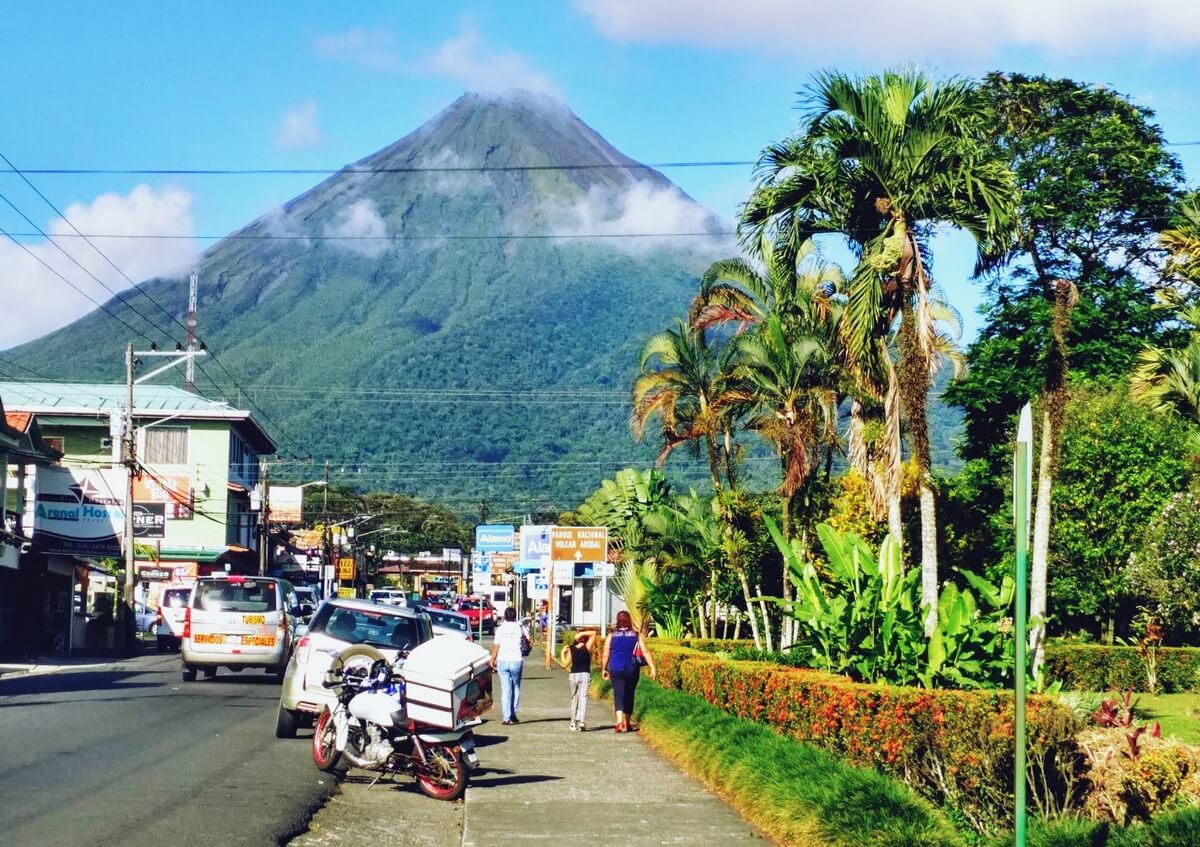
Explore La Fortuna, Costa Rica. The iconic Arenal Volcano, world-class hot springs & rainforest canopy tours - discover the best of the northern highlands.
La Fortuna, Costa Rica is the country's adventure capital — a small town in Alajuela Province set at the base of the Arenal Volcano, about a three-hour drive (130 km) northwest of San José. Known as "The Gateway to Arenal," La Fortuna packs an extraordinary amount into a compact area: hikes across old lava fields in Arenal Volcano National Park, volcanically heated hot springs, the 70-meter La Fortuna Waterfall, zip-lines and hanging bridges above the rainforest canopy, and white-water rafting on jungle rivers. This guide covers everything you need to plan a visit — the best things to do, how to get there, what it costs, when to go, and where to stay — along with the local history and 'Pura Vida' culture that make this former farming town one of Costa Rica's most rewarding destinations.
La Fortuna Quick Facts
- Location: Alajuela Province, northern Costa Rica — 130 km / ~3 hours from San José
- Known for: Arenal Volcano, hot springs, La Fortuna Waterfall, zip-lining, rafting
- Volcano status: Resting since October 2010 (last major eruption phase began July 29, 1968)
- Waterfall: 70 m (230 ft), ~500 steps to the base, ~US$18 entry
- Best months: February–April (driest, clearest volcano views)
- Ideal stay: 2–3 days
- Nearest airports: San José (SJO) ~3 hrs; Liberia (LIR) ~2.5–3 hrs
The Sleeping Giant: Arenal Volcano National Park
The undisputed centerpiece of La Fortuna is the near-perfect conical silhouette of Arenal Volcano rising 1,633 meters (5,358 ft) above the surrounding rainforest. For decades it was one of the world's most active volcanoes, producing near-daily lava flows visible from town. Since October 2010 it has been in a resting phase — you can no longer see red lava at night, but the mountain remains the emotional and visual anchor of every visit. Trails in Arenal Volcano National Park thread across cooled lava fields from the 1968 and 1992 eruptions, through secondary rainforest, and to viewpoints of the crater and Lake Arenal.
Arenal rises to roughly 1,670 meters (5,480 feet) and is geologically young — estimated at around 7,500 years old, making it one of the youngest stratovolcanoes in Costa Rica. The 1968 eruption destroyed the villages of Tabacón and Pueblo Nuevo and killed 87 people, an event that reshaped the region and ultimately redirected its economy toward tourism. The national park is administered by SINAC (Costa Rica's National System of Conservation Areas), and Costa Rica's tourism board (Instituto Costarricense de Turismo, ICT) lists Arenal among the country's most visited national parks.
How to Get to La Fortuna
La Fortuna sits about 130 km (80 miles) northwest of San José — a drive of roughly 3 hours via Route 1 and Route 141 through Zarcero and Ciudad Quesada, or a slightly longer but flatter route via San Ramón. The roads are fully paved and a 4x4 is not required.
- From San José (SJO): Rental car ~3 hours; shared shuttle vans (door-to-door) ~US$55–65 per person; public bus from Terminal 7-10 ~4.5 hours and under US$6.
- From Liberia (LIR): ~2.5–3 hours by car via Cañas and Tilarán, skirting the shores of Lake Arenal.
- From Monteverde: The famous "jeep-boat-jeep" transfer combines vans with a boat crossing of Lake Arenal — about 3 hours total and roughly US$30–40, versus 4+ hours driving around the lake.
- By air: Domestic flights from San José serve a small airstrip at El Tanque, 15 minutes from town.
Best Time to Visit La Fortuna
The dry season from February through April offers the highest chance of a cloud-free volcano and reliably sunny mornings. December and January are also popular but busier and pricier around the holidays. The green season (May–November) brings afternoon rain, lower prices, fewer crowds, and the lushest rainforest of the year — mornings are frequently clear, so plan volcano viewing and hikes before noon. La Fortuna's rainforest climate means brief showers are possible in any month; the volcano's summit is cloud-capped more often than not, so build in more than one chance to see it.
The Healing Waters: Hot Springs and Hydrotherapy
Water heated deep beneath Arenal surfaces across the valley in dozens of thermal springs, giving La Fortuna one of the highest concentrations of natural hot springs on the planet. The experience ranges from polished five-star resorts to a free stretch of river shared with locals.
Luxury Resorts
Properties like Tabacón, The Springs, and Baldi build elaborate networks of pools, waterfalls, and swim-up bars fed by natural thermal water, and pair them with full-service spas and wellness experiences. Day passes typically run US$40–90.
El Chorro (The Free Springs)
A warm stretch of river just off the road near Tabacón, El Chorro is free, popular with locals, and easy to combine with an afternoon in town. Bring water shoes and mind your belongings.
Eco-Thermal Parks
Mid-range options such as Paradise Hot Springs and Titokú offer a quieter, more nature-focused soak at a fraction of the resort price, usually with a light meal included.
The Giant Waterfall: Catarata Río Fortuna
A short drive from town, the Río Fortuna plunges 70 meters (230 ft) off a cliff into a jungle pool that's safe to swim in. Reaching the base means descending — and re-climbing — roughly 500 steps through primary rainforest. The site is managed by ADIFORT, the local community development association. Unlike most attractions in the region, the waterfall is not privately owned — entrance fees fund local schools, roads, and conservation, a detail worth knowing for travelers who care where their money lands.
Adventure on Water and in the Canopy
La Fortuna serves as the hub for an incredible variety of adrenaline-pumping activities. Lake Arenal, at the volcano's base, is the largest lake in Costa Rica and a magnet for kayaking, stand-up paddleboarding, and windsurfing. Lake Arenal covers roughly 85 square kilometers and is also a working piece of national infrastructure: its hydroelectric dam, completed in 1979, remains a significant contributor to Costa Rica's renewable electricity grid — a grid that runs on more than 98% renewable sources in most years.
Back on dry land (or rather, high above it), operators run canopy and zip-line tours that string riders across long steel cables over the rainforest, plus tamer hanging-bridge circuits like Mistico Arenal that let families and older visitors experience the treetops at walking pace.
For a bigger jolt, half-day trips with white-water rafting operators on the Balsa and Sarapiquí rivers run Class II–IV rapids through untouched jungle canyons.
The Town Center: Culture and Cuisine
La Fortuna's compact center is anchored by a whitewashed church facing a park where the volcano rises behind the belltower on clear afternoons. Around the plaza you'll find bakeries, coffee shops, souvenir stalls, and the tour desks that book most of the region's activities.
The culinary scene in La Fortuna is surprisingly diverse for a town this size — sodas serving casados and gallo pinto sit alongside wood-fired pizzerias, farm-to-table restaurants, craft-beer bars, and vegan cafés. For current openings, hours, and reviews, browse our directory of restaurants in La Fortuna.
Where to Stay in La Fortuna
- Town center: Best for budget travelers — hostels, guesthouses, sodas, and services within walking distance of the church plaza.
- The resort corridor (Route 142 toward the volcano): Home to the hot-spring resorts and volcano-view hotels; ideal for honeymooners and families who want pools and springs on-site.
- El Castillo and Lake Arenal: A quieter village 30–40 minutes away with boutique lodges, lake views, and dark skies.
Browse current options in our Arenal hotels directory.
How Much Does La Fortuna Cost?
Typical 2026 visitor prices (approximate, per adult):
| Activity | Typical price |
|---|---|
| Arenal Volcano National Park entrance | US$15 |
| La Fortuna Waterfall (ADIFORT) | US$18 |
| El Chorro free hot springs | Free |
| Hot spring resort day pass | US$40–90 |
| Hanging bridges (guided) | US$30–60 |
| Zip-line canopy tour | US$55–85 |
| White-water rafting (half day) | US$65–100 |
| Meal at a local soda | US$6–9 |
| Mid-range hotel (double, per night) | US$80–150 |
A comfortable mid-range couple should budget around US$150–250 per day including one paid activity, meals, and lodging.
A Perfect 3-Day La Fortuna Itinerary
Day 1 — Waterfall and springs. Arrive, walk the town center, then take on the ~500 steps down to La Fortuna Waterfall for a swim. Recover in the evening at a hot spring — either a resort day pass or the free El Chorro river springs.
Day 2 — Volcano day. Hike the lava-flow trails of Arenal Volcano National Park in the morning (clearest views), then cross the treetops at the Mistico Arenal Hanging Bridges in the afternoon with a naturalist guide.
Day 3 — Water and farms. Kayak or stand-up paddleboard on Lake Arenal, or run Class II–IV rapids on the Balsa or Sarapiquí rivers. End with a chocolate or coffee farm tour and a farewell casado at a soda.
La Fortuna vs Monteverde: Which Should You Choose?
| La Fortuna / Arenal | Monteverde | |
|---|---|---|
| Landscape | Rainforest + volcano | Cloud forest |
| Climate | Hot, 24–32°C | Cool, 13–21°C |
| Signature activities | Hot springs, volcano hikes, rafting | Canopy walks, quetzal birding, night tours |
| Best for | Adventure + relaxation | Wildlife + nature immersion |
| Travel between | ~3 hrs via jeep-boat-jeep | |
Most travelers visit both. The two destinations sit on opposite sides of Lake Arenal and are connected by a scenic 3-hour jeep-boat-jeep transfer — read our full guide to the cloud forests of Monteverde to plan the second half of the trip.
Sustainable Growth and Conservation
Tourism transformed La Fortuna from a farming outpost into one of Costa Rica's most-visited destinations, and locals have worked to keep that growth in check. Community-run projects like ADIFORT reinvest waterfall admissions in schools and infrastructure, and most tour operators are certified under the ICT's Certification for Sustainable Tourism program. Costa Rica's national commitment to renewable energy — powered in part by the very hydroelectric dam that formed Lake Arenal — is on display throughout the region.
What to Pack for La Fortuna
Quick-dry clothing, a light rain shell (any season), sturdy walking shoes for the waterfall steps and lava trails, a swimsuit for the springs, water shoes, insect repellent, reef-safe sunscreen, and a dry bag for rafting and boat transfers. Daytime temperatures run 24–32°C (75–90°F) year-round.
Is La Fortuna Safe? Practical Tips
La Fortuna is one of rural Costa Rica's safest and best-serviced towns, with banks, pharmacies, and supermarkets in the center. Standard precautions apply: don't leave valuables in parked cars, swim only in designated areas at the waterfall (currents are strong after rain), book adventure tours with operators certified under the ICT's Certification for Sustainable Tourism, and avoid driving rural roads after dark — not for crime, but for potholes and wildlife.
Key Takeaways
- La Fortuna is Costa Rica's adventure hub: volcano hikes, hot springs, waterfalls, zip-lines, and rafting within 20 minutes of town.
- Arenal Volcano has been in a resting phase since 2010 — you can hike its lava fields but not the summit.
- Hot springs range from free (El Chorro) to luxury resort day passes (US$40–90).
- Visit February–April for the best volcano visibility; green-season mornings are usually clear too.
- Pair La Fortuna with Monteverde via the 3-hour jeep-boat-jeep transfer across Lake Arenal.
La Fortuna FAQ
Is La Fortuna worth visiting?
Yes. La Fortuna is Costa Rica's adventure capital, combining the Arenal Volcano, natural hot springs, a 70-meter waterfall, zip-lines, hanging bridges, and white-water rafting in one compact destination.
How many days do you need in La Fortuna?
Two to three days is ideal. That covers Arenal Volcano National Park, the La Fortuna Waterfall, an evening in the hot springs, and one adventure activity like rafting or zip-lining.
Can you hike to the top of Arenal Volcano?
No. Summit hiking is prohibited for safety reasons. Trails in Arenal Volcano National Park cross the 1968 and 1992 lava flows on the lower slopes, with panoramic views of the crater and Lake Arenal. For a drive-up crater experience, see our Irazú Volcano day trip from San José.
When did Arenal Volcano last erupt?
Arenal erupted violently on July 29, 1968, and remained continuously active until October 2010, when it entered its current resting phase. It no longer produces visible lava.
How much does the La Fortuna Waterfall cost?
Entrance is about US$18 per adult, paid to ADIFORT, the local community association that reinvests proceeds in schools, infrastructure, and conservation. Reaching the base requires descending roughly 500 steps.
Are there free hot springs in La Fortuna?
Yes. El Chorro, a warm stretch of river near the Tabacón resort entrance, is free and open to the public. Resort day passes range from about US$40 to US$90.
How far is La Fortuna from San José?
About 130 km (80 miles) — roughly a 3-hour drive. Shared shuttles cost US$55–65 per person; the public bus takes about 4.5 hours.
Do you need a car in La Fortuna?
No. The town is walkable and tours include hotel pickup. A rental car helps for El Castillo, Lake Arenal, and self-paced park visits, but shuttles and taxis cover everything else.
What is the best month to visit La Fortuna?
February through April offers the driest weather and clearest volcano views. May through November is cheaper and greener, with usually clear mornings and afternoon showers.
Which is better, La Fortuna or Monteverde?
They're complementary rather than competing: La Fortuna is warmer with volcano views, hot springs, and big-adventure activities; Monteverde is a cool, misty cloud forest focused on wildlife and canopy walks. Most itineraries include both, connected by the 3-hour jeep-boat-jeep transfer across Lake Arenal.
Plan the Rest of Your Trip
Whether you come for the thrill of a zip-line through the clouds, a quiet rainforest hike, or a long soak in volcano-heated springs, La Fortuna delivers more variety per square kilometer than anywhere else in Costa Rica. Plan two to three days minimum, book volcano-view accommodation for the dry-season months, and leave room in the schedule for the town itself — the sodas, the church plaza, and the farms that fed this community long before the first tour bus arrived.
Ready to plan the rest of your trip? Browse our directory of hotels in the Arenal area, find restaurants in La Fortuna, explore everything in the Arenal region, or continue reading with our guide to the cloud forests of Monteverde — La Fortuna's most popular next stop.