Irazú Volcano & Cartago Day Trip: Costa Rica One-Day Guide
By The Costa Rica List Editorial — Wed Jul 01 2026
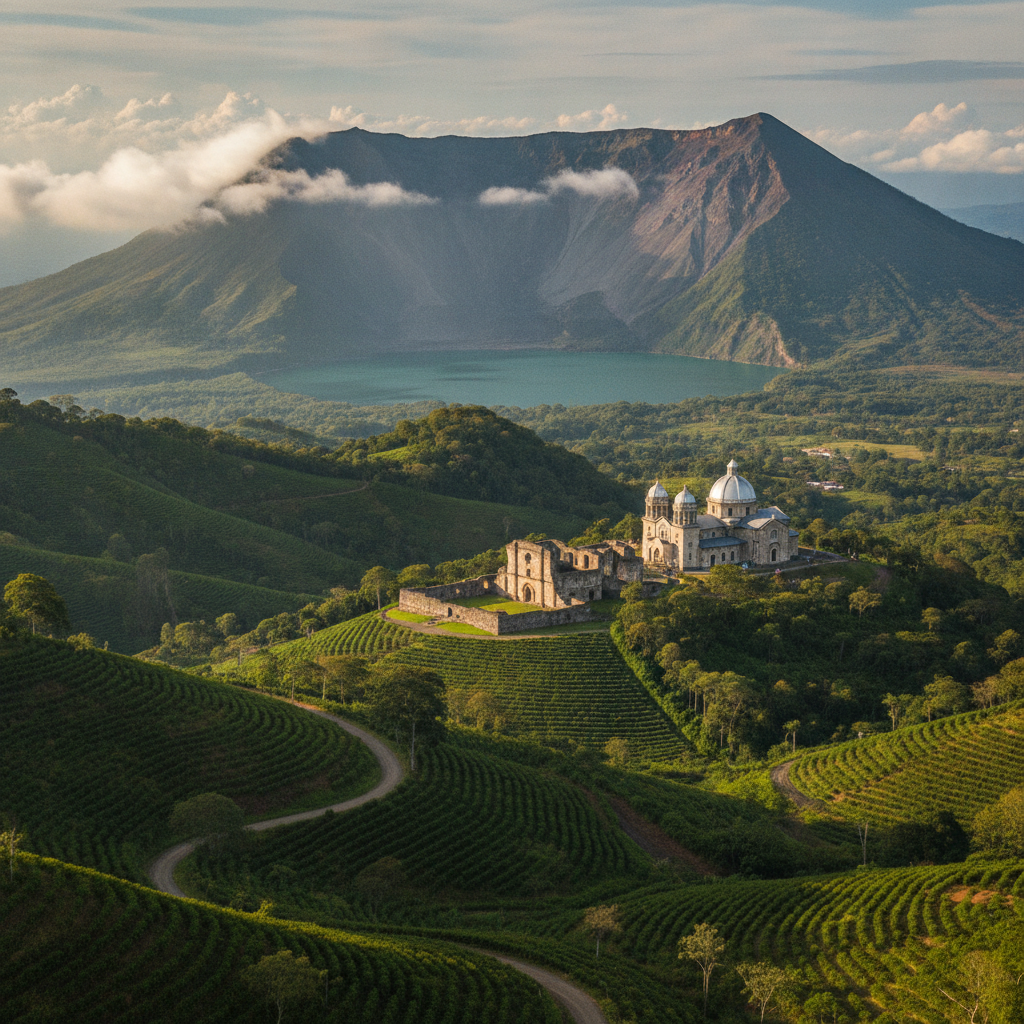
Irazú Volcano and Cartago in one day: crater views at 3,432m, the Basílica de los Ángeles, church ruins & Lankester Gardens — a Costa Rica highlands itinerary.
A day trip to Irazú Volcano and Cartago is one of the most rewarding excursions in Costa Rica's Central Highlands — the country's highest active volcano paired with its former colonial capital. While many travelers head straight for the golden beaches of the Pacific or the lush rainforests of La Fortuna, a journey to the Central Highlands provides a cooler, more contemplative experience. This day trip takes you from the "Coloso de Tierra Blanca," the highest active volcano in the country, to the historic streets where the nation's religious and political foundations were laid.
Morning: Ascending to the Moon at Irazú Volcano
To experience Irazú at its best, an early start is non-negotiable. Often, by midday, the mist rolls in from the Caribbean, obscuring the dramatic views that make this national park famous. The drive from San José or Cartago winds through the fertile slopes of Tierra Blanca, where the volcanic soil yields a mosaic of onion, potato, and cabbage fields. As the elevation increases, the lush green fields give way to stunted, wind-swept vegetation and eventually, a landscape that looks more like the lunar surface than a tropical paradise.
Irazú Volcano National Park is unique because of its ease of access. Unlike many volcanoes that require strenuous hiking, visitors can drive nearly to the edge of the main craters. At 3,432 meters (11,260 feet) above sea level, the air is thin, crisp, and noticeably colder. On exceptionally clear days, those who arrive early might be treated to the rare sight of both the Pacific Ocean and the Caribbean Sea from the summit.
The Crater Principal and Its Green Lake
The main attraction is the Crater Principal, a massive, yawning pit nearly a mile wide. At its bottom lies a lake that varies in color depending on the mineral content and rainfall, shifting from a brilliant turquoise to a milky emerald green. Walking along the ash-covered plains around the crater, you'll notice the silence is only broken by the whistling wind, creating an atmosphere of profound isolation and natural grandeur.
Diego de la Haya Crater
Nearby, the Diego de la Haya crater offers a different perspective, showing the raw power of past eruptions. Its dry, rust-colored basin contrasts sharply with the mineral lake of the main crater and hints at the volcano's long history of violent activity.
Midday: Lunch in the Orosi Valley or Volcanic Slopes
As you descend from the summit, your appetite will likely catch up with the altitude change. The slopes of Irazú are dotted with miradores (lookout points) and traditional "sodas"—family-run restaurants serving hearty Costa Rican fare. This is the perfect time to try a Casado, the traditional lunch plate featuring rice, beans, salad, plantains, and a protein, often served with a side of local cheese from the nearby Turrialba region.
For those willing to drive a bit further, the nearby Orosi Valley offers a stunning backdrop for a meal. The valley is one of the most beautiful in the country, featuring the winding Revantazón River and coffee plantations that stretch across the hillsides. Whether you eat at a roadside stall or a more formal restaurant, the local coffee here is a must-try; it is often cited as some of the smoothest in the Central Valley due to the high-elevation volcanic soil.
Afternoon: Faith and Ruins in Cartago
By early afternoon, you will arrive in Cartago, the city that served as Costa Rica's capital during the Spanish colonial period until 1823. Cartago is a city defined by its history, its resilience against earthquakes, and its deep spiritual significance to the Tico people.
The centerpiece of the city is the Basílica de Nuestra Señora de los Ángeles. This Byzantine-style cathedral is the most important religious site in the country. It was built to honor the "Virgen de los Ángeles" (also known as "La Negrita"), a small black stone statue of the Virgin Mary found by an indigenous woman in 1635. Every August, millions of pilgrims from across Costa Rica walk to this spot to pay their respects. Even on a quiet weekday, the interior of the basilica—with its ornate woodwork, stained glass, and the humble grotto where the statue was found—is deeply moving.
Just a few blocks away lie the Ruinas de la Parroquia de Santiago Apóstol. Often simply called "The Ruins," these are the skeletal remains of a church dedicated to St. James the Apostle. Construction began in the 1870s, but the building was repeatedly destroyed by earthquakes before it could be finished. Today, the ruins have been converted into a beautiful public park. The roofless stone walls, arched windows, and manicured gardens inside create a hauntingly beautiful space where visitors can wander and reflect on the city's turbulent seismic history.
Exploring the Lankester Botanical Garden
If time permits before the sun sets, a short trip to the outskirts of Cartago leads to the Lankester Botanical Garden. Managed by the University of Costa Rica, this 26-acre garden is a world-class center for orchid research. While the volcano represents the raw, geological force of nature, Lankester represents its delicate biodiversity.
The garden features over 3,000 species of plants, with a primary focus on epiphytes (plants that grow on other plants). Navigating the well-marked trails, you will find greenhouses brimming with orchids of every imaginable shape and size, some so small they require a magnifying glass to appreciate. The Japanese garden on-site, with its tranquil ponds and bamboo groves, offers a peaceful bookend to a day filled with exploration.
Irazú Volcano Entry: Fees, Hours & Reservations
Entry to Irazú Volcano National Park must be reserved in advance through SINAC's online booking system (SICORE). Walk-up tickets are not guaranteed, morning slots sell out first, and tickets are personal and non-refundable, so book at least a few days ahead. The park is open daily from 8:00 a.m. to 3:30 p.m. and the entrance fee is US$15 for foreign visitors, with a lower rate for nationals and residents. To book: create a free account at serviciosenlinea.sinac.go.cr, select 'Parque Nacional Volcán Irazú – Sector Cráter', choose your date and time slot, and pay online by card. Note that the crater area and the forested Prusia sector are booked separately. Two dates to know: admission is free for everyone on August 24 (National Parks Day), and free for nationals and residents on the third Wednesday of each month.
Practical Tips for Your Journey
- Dress in Layers: The temperature at the top of Irazú can hover near freezing, while Cartago down below can be quite warm. Bring a heavy jacket, a hat, and a windbreaker.
- Booking Entry: Entry to Irazú Volcano National Park typically requires advanced reservation through the SINAC (National System of Conservation Areas) website. It is best to secure your spot at least a few days in advance.
- Transportation: While buses run from San José to Cartago and a specific "Volcán Irazú" bus leaves San José daily, having a rental car is highly recommended for this itinerary to allow for flexibility and stops in the Orosi Valley.
- Sun Protection: The high altitude means the sun's rays are extremely strong, even if it feels cold. Wear sunscreen and sunglasses.
Frequently Asked Questions About Irazú Volcano
Do I need a reservation to visit Irazú Volcano?
Yes. Entry to Irazú Volcano National Park requires an advance reservation through SINAC's official online system (SICORE). Book at least a few days ahead — tickets are personal, non-refundable, and morning slots sell out first.
How high is Irazú Volcano?
Irazú stands at 3,432 meters (11,260 feet), making it the highest active volcano in Costa Rica. On exceptionally clear mornings you can see both the Pacific Ocean and the Caribbean Sea from the summit.
Can you see the crater lake at Irazú?
The Crater Principal holds a mineral lake that shifts between turquoise and emerald green depending on rainfall and mineral content. Arrive early — mist from the Caribbean usually covers the craters by midday.
Is Cartago worth visiting?
Yes. Cartago was Costa Rica's capital during the Spanish colonial period until 1823 and is home to the Basílica de Nuestra Señora de los Ángeles, the country's most important religious site, plus the beautiful ruins of the Santiago Apóstol church.
A day spent between the peaks of Irazú and the streets of Cartago provides a comprehensive look at what makes the Costa Rican highlands so special. From the dramatic, scorched earth of the crater to the quiet serenity of the Basilica, this journey bridges the gap between the country's ancient geological past and its vibrant cultural present. It is a reminder that beyond the beaches, Costa Rica offers a landscape of high-altitude wonders and deep-rooted traditions waiting to be discovered.