Manuel Antonio National Park Guide for Tourists: Costa Rica's Most Famous Wildlife Reserve
By The Costa Rica List Editorial Team — Wed Jul 15 2026
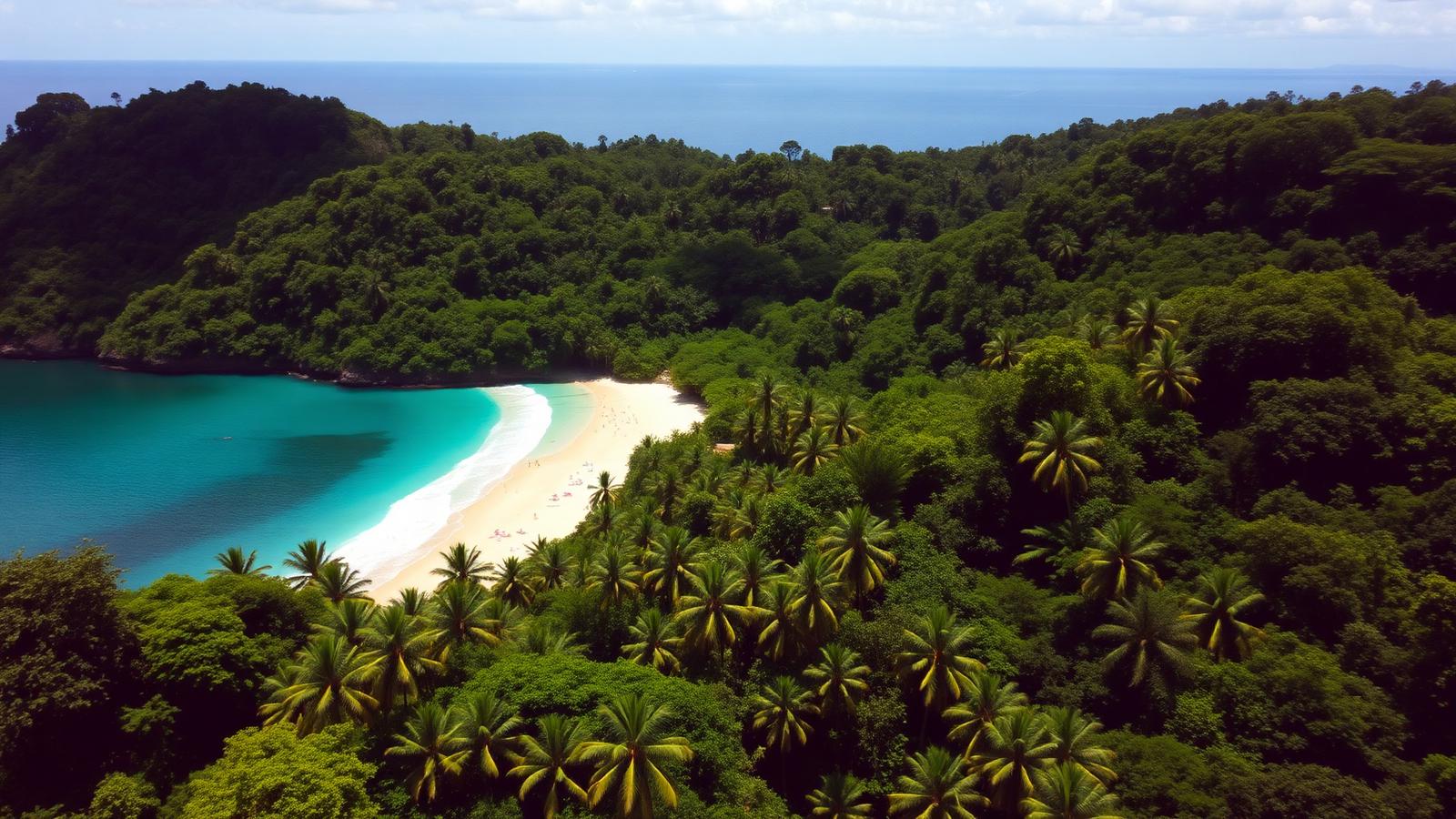
Plan your visit to Manuel Antonio National Park, Costa Rica: wildlife, beaches, trails, entry fees, best time to go, and top tips for first-time visitors.
Nestled on the Central Pacific coast of Costa Rica, Manuel Antonio National Park sits next to the town of Quepos. It is the smallest of Costa Rica's national parks, and yet, it is the most popular.
Manuel Antonio has all the important elements that many of the world's most popular travel destinations contain: a unique wealth of wildlife, unspoiled white-sand beaches, and rainforest trails that can all be experienced in the park in just a few short hours.
If you are considering a trip along the coast of Costa Rica, make sure you don't miss visiting Manuel Antonio National Park — the wildlife and scenic beauty here are truly one of a kind. Looking for more activities in Costa Rica to round out your trip? Start there.
A Brief History of Manuel Antonio National Park
Manuel Antonio National Park became official in 1972, though the local development-protection activism efforts began in the years prior. The local forests and beaches were too ecologically important to be lost to private construction. In order to preserve the greenery, the government of Costa Rica set aside about 1,900 hectares of land and water to be made into protected natural space.
The park is a beautiful combination of tropical rainforests, coastal habitats, and mangrove estuaries. The nature within the boundaries of the newly protected area was ideal for the small animals and species that inhabit this increasingly developed stretch of Costa Rica.
In fact, Manuel Antonio became a model for protecting habitats across the greater network of Costa Rica's national parks.
Wildlife That Puts Manuel Antonio on the Map
For many, the main reason for including a stop at Manuel Antonio is its wildlife. The park is home to one of the last remaining populations of the Central American squirrel monkey, a small endangered primate found in only a few places in Panama and Costa Rica.
Don't miss the white-faced capuchin monkeys, which can be found in the park in large, noisy groups and often can be seen from the trails without the need for binoculars.
You may also be lucky enough to sight iguanas, coatis, and agoutis at the edge of the designated trails. It is also common to see dolphins in the Pacific waters, and during the right season, humpback whales are among the mammals you may encounter on the boat trips and catamaran tours that depart nearby.
The high density of wildlife is a major reason why so many people recommend taking wildlife tours at Manuel Antonio National Park. A good guide can help you spot creatures that the average visitor would walk right past.
Things Tourists Love to Do in Manuel Antonio
Tourists who visit Manuel Antonio often focus solely on seeing wildlife. However, there is plenty more to do here.
Visit the Trails
The best way to see the national park is to hike the main trails. The Sendero Perezoso (Sloth Trail) and Sendero Punta Catedral are the two most popular and easiest routes. Punta Catedral has views of the ocean on either side and loops around a headland.
Unwind on the Beach
You can also spend time relaxing on the beaches inside the park. Playa Manuel Antonio and Playa Espadilla Sur are two great choices. Both are safer and calmer for swimming compared with most beaches on Costa Rica's Pacific coast.
Take Guided Tours
To get a better wildlife experience, book a certified naturalist. Much of the wildlife in the park is camouflaged and/or nocturnal, so having a trained guide really helps. Browse guided tours in Manuel Antonio before you arrive so you can lock in a spot with a top-rated operator.
Adventure into the Water
To broaden the experience, go beyond the park. There are catamaran sunset cruises, seasonal whale watching trips, and snorkeling trips that pair perfectly with a morning in the park.
Explore Quepos
Be sure to check out Quepos as well. It is an easy place to grab a meal — browse restaurants in Quepos — do some shopping, and catch a bus onward or back to San José.
What's the Best Time to Visit Manuel Antonio?
Plan your trip keeping in mind that Costa Rica's Pacific coast has distinct wet and dry seasons. The best time for clear, dry, bright weather in Manuel Antonio is mid-December through April — the dry season. This time of year brings firm trails, the best conditions for spotting wildlife, and the most usable beaches. It also means higher prices and larger crowds.
Fewer crowds and generally still-good weather make the "green season" from May to November worth considering. Most rain falls in quick afternoon downpours; mornings tend to clear up and the forests get lusher. September and October are the wettest months and the quietest, ideal for exploring trails without the crowds.
No matter the season, the best time to visit for cool weather, active wildlife, and fewer crowds is right when the park opens, early in the morning.
| Season | Months | Weather | Crowds & Prices | Good For |
|---|---|---|---|---|
| Dry season | Mid-December – April | Sunny, minimal rain, firm trails | Peak crowds, highest prices, book ahead | Guaranteed sunshine, best beach days |
| Early green season | May – August | Clear mornings, brief afternoon showers | Moderate crowds, better rates | A balance of good weather and lower costs |
| Peak green season | September – October | Heaviest rainfall of the year | Lowest crowds, lowest prices | Solitude on the trails, lush scenery |
| Late green season | November | Rain tapering off, transitioning to dry | Crowds starting to build again | Shoulder-season value before peak |
Tips for Tourists and First-Timers
Once you've picked your season, there are a few things you should know about actually visiting.
- Entry fee. Foreign adults pay around $18 USD, kids aged 2–12 get a discount, and there's a local rate for residents and citizens of Costa Rica. Admission gives you a full day with monkeys, sloths, and the ocean.
- Grab a guide. You must enter with a certified, park-authorized guide. It's worth having one — guides can spot sloths 30 feet overhead that you'd never notice.
- Visiting hours. The park is open Wednesday through Monday and closed on Tuesdays to give the rainforest a rest day. Once capacity is reached, entry stops, so show up early.
- Book well ahead. Lines get long, especially in high season. Booking in advance keeps your day at the park relaxed.
- Pack smart. Hot-weather clothes, closed-toe shoes, bug spray, reef-safe sunblock, and water. Bring a rain jacket just in case.
- Getting there. A quick taxi or drive from Quepos gets you to the entrance, with everything from budget hostels to nicer resorts along the way. Compare hotels near Manuel Antonio to pick the right base.
- Browse tour operators. A number of reputable operators run tours of the park, which is especially helpful for families — you enjoy the park while safety and transport are handled for you.
A Memory Worth Making
Manuel Antonio has something for everyone. Watching a sloth inch through the canopy or a squirrel monkey leap over your head sticks with you long after the trip. This tiny, lush wonderland offers more than most parks its size — awesome shots of monkeys and sloths plus breathtaking beach photos, all from one short morning walk. It can be a quick stop between beach towns, or, with a bit of planning around the right season and a great guide, the highlight of your Pacific coast itinerary.
FAQs About Your Next Visit to Manuel Antonio National Park
What are the top Manuel Antonio things to do during the summer?
Costa Rica's "summer" (the dry season, roughly December through April) is when the park sees the most visitors. It's the best time for hiking the Sendero Perezoso and Punta Catedral trails, and for booking snorkeling or catamaran tours out of Quepos.
Should Manuel Antonio wildlife tours always be guided? Can I explore on my own?
Unguided exploring is not recommended. Park rules require visitors to enter with a certified guide. Much of the wildlife is well camouflaged, and a trained guide will show you far more than you'd find alone.
Is it safe to swim at the Manuel Antonio National Park beaches?
Generally yes. Playa Manuel Antonio and Playa Espadilla Sur are calmer than most Pacific beaches, but always follow lifeguard guidance and check conditions before you go in.
Is Manuel Antonio National Park big enough for a one-day tour?
Yes. A single day gives you plenty of time to hike, watch wildlife, and relax on the beaches.
What about food stops, restrooms, or safety lockers in the park?
There are small food stops, eateries, and restrooms near the entrance. Guided tour operators typically provide lockers to secure your belongings.
How do I find the best guided tour to Manuel Antonio National Park?
Research operators online before your visit — read reviews, compare itineraries, and book a reputable guide who knows the trails well.