Moving to Costa Rica: Visas, Residency and What Nobody Tells You
By Written by the editorial team at The Costa Rica List — Mon Oct 05 2026
Every route to Costa Rican residency compared: Pensionado, Rentista, Inversionista, digital nomad and family ties. Costs, timelines and what to expect.
Thinking about relocating to Costa Rica? You may have already researched the cost of living, calculated your rent, and pictured yourself starting your day sipping coffee and listening to howler monkeys in the beautiful destination that Costa Rica is. The real question then becomes, how do you go about being a legal resident? This guide compares every main route to Costa Rican residency, what sets them apart, and the surprising things new residents learn after the paperwork is done.
Published: 5 October 2026 · Last updated: 5 October 2026 · Requirements last verified: 5 October 2026 against the Dirección General de Migración y Extranjería (DGME)
Quick answer: there is no single Costa Rica visa. Retirees with a pension use Pensionado, which needs $1,000 a month. People with other passive income use Rentista. Investors use Inversionista. Remote workers have a separate digital nomad route that does not lead to residency. All of them require CAJA enrolment.
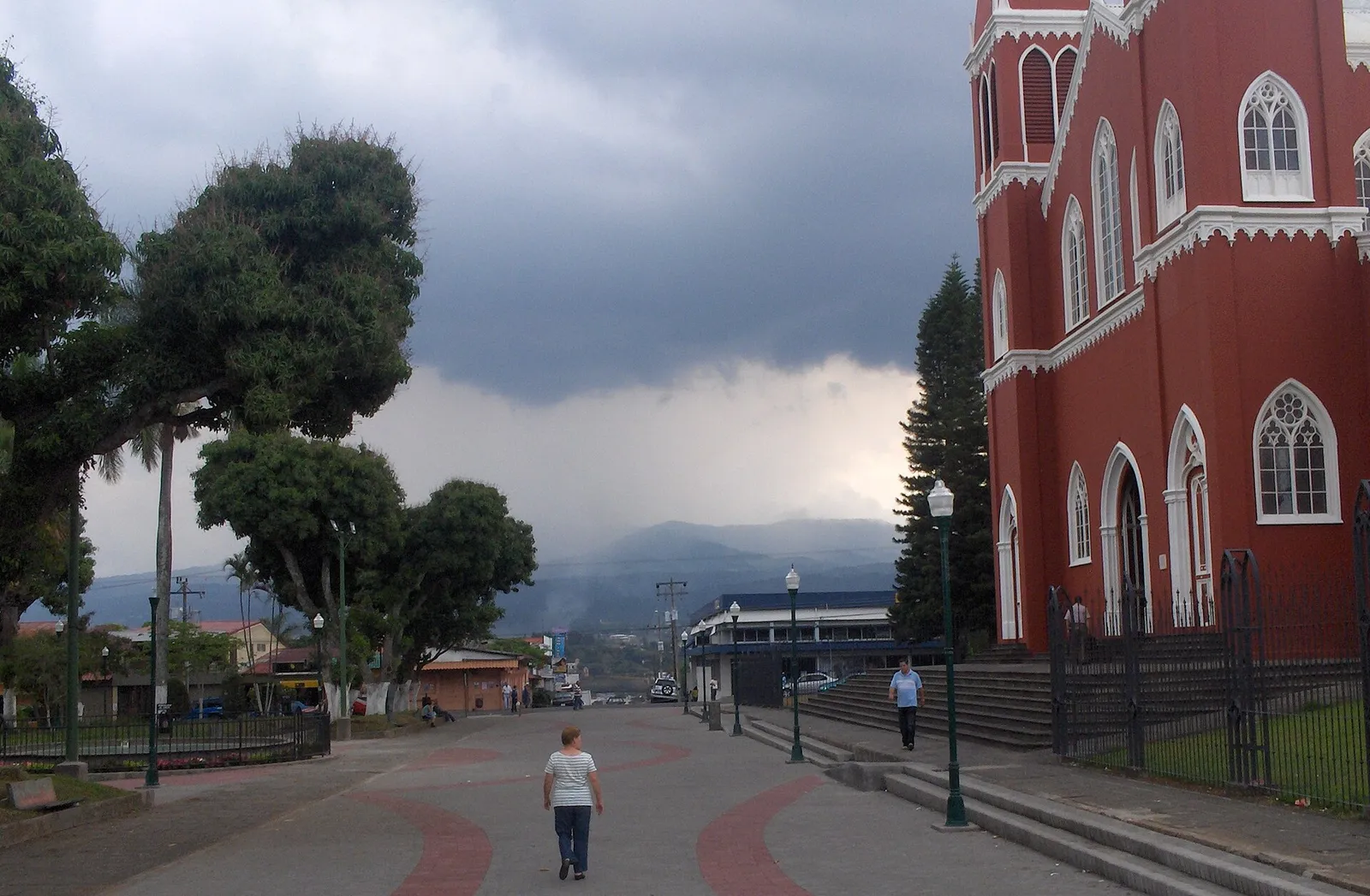
Moving to Costa Rica starts with choosing the right residency route, not the right beach. Photo: jdanielgb, Boulevard Grecia, CC BY-SA 4.0.
Which Costa Rica Residency Route Is Right for You
The table compares the six routes most people use. Figures are the thresholds set by the Dirección General de Migración y Extranjería (DGME), verified on 5 October 2026. Total costs are estimates of attorney, government and document fees, not including the income or investment itself.
| Route | Who it suits | Income or investment required | Leads to permanent residency | Can you work locally | Typical total cost |
|---|---|---|---|---|---|
| Pensionado | Retirees with a lifetime pension | $1,000 a month pension | Yes, after three years | No, not as an employee | ~$1,200–$4,000 |
| Rentista | People with passive income and no pension | $2,500 a month for two years, or a $60,000 deposit in a Costa Rican bank | Yes, after three years | No, not as an employee | ~$1,200–$4,000 |
| Inversionista | Investors in property or business | $150,000 investment in Costa Rica | Yes, after three years | No as an employee; may earn from own investment | ~$1,500–$4,000+ |
| Digital nomad | Remote workers employed or paid from abroad | $3,000 a month ($4,000 with family) | No | No, foreign clients or employer only | ~$100 government fee plus documents, often under $1,000 |
| Family ties (vínculo) | Spouses of Costa Ricans, parents of Costa Rican children | None | Yes | Yes | Usually the lowest, often under $1,500 |
| Tourist entry (not residency) | Short stays and people still deciding | Proof of onward travel and funds | No | No | Travel costs only |

Choosing between routes is largely a matter of which income or investment you can document. A licensed Costa Rican immigration attorney can confirm which category your paperwork fits before you start collecting documents.
Why Costa Rica Is a Preferred Destination for Expats
Costa Rica has welcomed foreign residents for decades. Its residency system is older and more developed than most in Latin America. It also has the added benefits of a stable democracy, universal healthcare, two coastlines and some of the richest biodiversity on earth, and of course the abolishment of its military in 1948. Most importantly, the combination of Costa Rica's natural beauty and relative stability makes Costa Rica a top destination for expats worldwide. For some, that combination outweighs everything else, including the cost of living. Many settle in the slower-paced Nicoya Peninsula Blue Zone, and our guide to whether Costa Rica is safe covers the day-to-day security picture.
There Is No Single "Costa Rica Visa"
Costa Rica does not have a single "Costa Rica Visa." Instead, the Government has tiered residency categories based on prospective applicants' financial profiles. The three most common are Pensionado, Rentista and Inversionista, with separate routes for digital nomads and for people with family ties to Costa Rican citizens.
Pensionado: For Retirees With Pension Income
The Pensionado category is designed for retirees with a guaranteed lifetime pension of at least $1,000 USD per month (DGME threshold, verified 5 October 2026). No investment is required, which makes it the most cost-effective residency category. It suits retirees whose pension is a lifetime entitlement from a single source. For the full requirements, documents, benefits and processing detail, see our Costa Rica Pensionado visa guide for retirees.
Rentista: For Passive Income Without a Pension
The Rentista category is designed for applicants without a pension who have other income, such as investments or rentals. It requires at least $2,500 USD per month from sources outside Costa Rica, guaranteed for at least two years, or a lump sum deposit of $60,000 USD in a Costa Rican bank that is drawn down over the period (DGME thresholds, verified 5 October 2026). It suits younger, financially independent applicants who are not yet pensionable. The Pensionado and Rentista guide compares the two categories in detail.
Inversionista: For Investors
Investors can apply for residency after making an investment in Costa Rica, mostly in real estate, company shares, securities, tourism, and reforestation projects. The current minimum investment is $150,000 USD, set by Law 9996 and applied by the DGME (verified 5 October 2026). The investment must be registered in the applicant's name and supported by a valuation or registry documentation. Spouses and children under 25 can usually be included on the same application.
Investment minimums have changed several times over the years as Costa Rican laws are amended, which is a prime example of why a law's current requirements should always be verified with the DGME or an attorney while applying for this particular visa. Buyers financing a purchase should read our guide to getting a mortgage in Costa Rica as a foreigner, since a mortgaged property only counts toward the threshold for the equity actually invested.
Digital Nomad Visa: For Remote Workers
Costa Rica's digital nomad law (Law 10008) created a dedicated stay for people who work remotely for employers or clients outside the country. Applicants must show income of at least $3,000 USD per month, or $4,000 USD per month when applying with family members (DGME thresholds, verified 5 October 2026). The stay is granted for one year and can be extended for one further year. Applicants also need health insurance that covers them for the full stay.
The route has its own tax treatment: income earned from abroad is exempt from Costa Rican income tax for the duration of the stay. Two limits matter. Digital nomads cannot work for Costa Rican employers or sell services to the local market, and time spent on the digital nomad stay does not count toward temporary or permanent residency. Anyone who wants to stay long term will eventually need to qualify under another category.
Residency Through Family Ties
Residency through a family link (vínculo) is one of the most commonly used routes in the country. It is available to foreigners married to a Costa Rican citizen and to parents of a Costa Rican child. There is no income threshold, which makes it the cheapest route by a wide margin. Marriage-based applicants receive residency on the strength of the marriage, and the DGME may check that the marriage is genuine. Residents under this route are generally free to work, unlike Pensionado, Rentista and Inversionista temporary residents.
What Residency Costs to Apply For
Application costs are separate from the income or investment threshold each category requires. The figures below are estimates for 2026.
| Residency Category | Attorney Fees | Government Filing Fees | Apostille, Translation & Consular Fees | Estimated Total |
|---|---|---|---|---|
| Pensionado | $700–$3,000 | ~$200–$350 | ~$200–$750 | ~$1,200–$4,000 |
| Rentista | $700–$3,000 | ~$200–$350 | ~$200–$750 | ~$1,200–$4,000 |
| Inversionista | $1,000–$3,000+ (often higher due to investment structuring/verification) | ~$200–$350 | ~$200–$750 | ~$1,500–$4,000+ |
Disclaimer: These costs are estimates only and will vary based on your attorney or immigration service, government filing fees, and document requirements. Confirm current pricing with a licensed immigration attorney before budgeting.
How These Charges Are Structured
The biggest part of the cost is attorney or immigration service fees (which will vary the most), plus fixed government filing fees, and the costs for document apostille, translation, and consular authentication. All of these combine to be the application cost, apart from the income/investment threshold your visa requires, and any continuing CAJA payments after approval. For the wider monthly budget once you arrive, see our cost of living in Costa Rica guide.
From Temporary to Permanent Residency to Citizenship
The Pensionado, Rentista and Inversionista categories have a similar structure:
To qualify for temporary residency, you must submit an initial application. This residency is granted for a two-year period and can be renewed.
According to the DGME, after three consecutive years of holding temporary residency, the applicant qualifies for permanent residency, during which the majority of the income restrictions and work restrictions are lifted.
Most applicants qualify to apply for Costa Rican citizenship after seven years of residency. The qualifying period is shorter for nationals of Spain and Ibero-American countries, generally five years, and for people married to a Costa Rican citizen. Naturalisation requires a basic conversational Spanish test and a civics exam.
Temporary residents under Pensionado, Rentista, or Inversionista status are generally not allowed to work as employees of a Costa Rican company, although they may be able to operate a business or receive income from investments. Digital nomads, who are on a separate track, do not move toward permanent residency at all.
Taxes for Residents in Costa Rica
Costa Rica applies a territorial tax system, administered by the Ministerio de Hacienda. Income is generally taxed only when it is earned from a Costa Rican source. Foreign pensions, investment returns and remote income from abroad generally fall outside the Costa Rican income tax net, which is one of the main reasons this audience moves.
What is taxable locally: wages from a Costa Rican employer, profits from a business operating in Costa Rica, rental income from Costa Rican property, and property-related charges such as the annual municipal property tax and vehicle circulation fees. Sales tax (IVA) of 13% applies to most purchases.
Residency does not change obligations at home. US citizens are taxed on worldwide income and must still file a US return every year, along with any foreign bank account reports that apply. Citizens of other countries should check whether they remain tax resident at home after moving.
Disclaimer: This tax summary is general information, not tax advice. Tax rules in Costa Rica and in your home country can change and depend on your circumstances. Confirm your position with a qualified tax professional before you move.
What Nobody Tells You Before You Move
The visa is only the first step to moving to Costa Rica. These are the things that tend to surprise new expats the most, and none of them appear in plain English on a government website.
CAJA Enrolment Is Mandatory and Private Insurance Does Not Exempt You
Every legal resident must register with Costa Rica's public healthcare system, run by the Caja Costarricense de Seguro Social (CCSS) and known as CAJA. Having private insurance does not exempt you from this requirement. The monthly charge is calculated as a percentage of the income you declare on your application, roughly 7% to 11% depending on the income band, so the income you use to qualify directly sets what you pay. Proof of CAJA payments is checked at every renewal. Our healthcare providers directory lists private clinics and doctors many residents use alongside CAJA.
The Wait Is 8 to 12 Months and Approval Is Not Guaranteed
Expect a lot of paperwork, patience, and a financial cushion to help cover expenses. Processing at the DGME typically takes 8 to 12 months or more from the time an application is submitted to the time it is approved. Residency application approval is not guaranteed, so it helps to have a financial cushion. Many people rent first while they wait; our guide to renting vs buying in Costa Rica covers the trade-offs.
Every Renewal Means Proving the Income Again
Temporary residency is not a hurdle you jump once. It must be renewed, and each renewal requires proof that you still meet the income requirement, along with up-to-date CAJA payments. So, from day one, maintain thorough financial records.
Opening a Bank Account Is Harder Than You Expect
Costa Rican banks apply strict anti-money-laundering rules. Before your residency card (DIMEX) is issued, many banks will only open a basic account, if any, and most ask for a passport, proof of address, a reference letter and documented proof of where your money comes from. Rentista applicants who need to make the $60,000 deposit should plan this step early, as it can take weeks.
Importing or Buying a Car
Initial paperwork and ongoing requirements continue after the visa, and vehicles are where many new residents get their first shock. Importing a car means paying import taxes calculated on the vehicle's assessed value, commonly between about 50% and 80% of that value depending on the car's age, plus shipping, customs agent fees and registration. Once registered, every vehicle needs an annual circulation permit (marchamo) and a periodic technical inspection (RTV). Used cars sold locally carry those import taxes in their price, so they cost noticeably more than at home. Many new arrivals rent for the first months; our directory lists car and vehicle services.
Driving Licence, Pets and Shipping
A valid foreign driving licence can generally be used only while you are in the country on tourist status. Once you hold residency, you need to convert it to a Costa Rican licence through COSEVI. Pets need an import permit and a veterinary health certificate meeting the requirements of SENASA, Costa Rica's animal health service. Shipping household goods is possible, but residents under the main categories do not get a general duty exemption, so many people ship less than planned and buy locally.
Moving to Costa Rica FAQs
Can I work in Costa Rica on a Pensionado or Rentista visa?
People in these categories are temporary residents and generally cannot work as employees in Costa Rica. Owning a business and remote work for foreign employers is subject to varying rules.
How long does it take to get permanent residency in Costa Rica?
Temporary residency is granted for two years and is renewed while you hold it. According to the DGME, you can apply for permanent residency after three consecutive years of temporary residency. On top of that, the initial application typically takes 8 to 12 months or more to be approved, so the full journey from first filing to permanent residency is usually around four years.
Do I need a lawyer to apply for Costa Rica residency?
You do not need a lawyer, but many applicants do hire one to help them make sure the process is not delayed by errors in form or documentation.
How much money do you need to move to Costa Rica?
It depends on the route. Pensionado needs a $1,000 monthly pension, Rentista needs $2,500 a month for two years or a $60,000 bank deposit, Inversionista needs a $150,000 investment, and the digital nomad stay needs $3,000 a month ($4,000 with family). Application costs typically add $1,200 to $4,000.
Can my spouse and children be included on my application?
Yes. Under Pensionado, Rentista and Inversionista, a spouse and children under 25 (or older dependants with a disability) can usually be included as dependants on the main applicant's residency. Each dependant needs their own documents and must enrol in CAJA.
Do I have to give up my own citizenship?
No. Residency does not affect your existing citizenship. Costa Rica also permits dual nationality for people who later naturalise, although your home country's own rules on dual citizenship still apply.
Do I pay tax in Costa Rica on income from home?
Generally no. Costa Rica taxes income on a territorial basis, so foreign-source income such as pensions or investment returns from abroad is generally outside the Costa Rican tax net. US citizens must still file US tax returns.
What is the cheapest residency route?
Residency through family ties, as the spouse of a Costa Rican or the parent of a Costa Rican child, is the cheapest because it has no income or investment threshold. Among the financial categories, Pensionado has the lowest requirement at $1,000 a month.
Can I live in Costa Rica on tourist visas by leaving every 90 days?
Many people do, but it is not residency. Many nationalities can enter as tourists for up to 90 days, and since 2023 immigration officers can grant some nationalities up to 180 days, at their discretion. Each entry requires proof of onward travel and funds, you cannot work, banking and car ownership are harder, and officers can refuse entry to people who appear to be living in the country on repeated tourist stays.
Talk to an Immigration Attorney Before You Apply
Costa Rica's immigration laws, income thresholds, and the administrative process change from time to time. The information provided is a general guideline at best and cannot be used instead of legal counsel. Immigration and relocation attorneys licensed to practice in Costa Rica offer the best advice and should be contacted prior to filing. Getting that first step right makes everything else that follows, from your first CAJA payment to acquiring permanent residency, easier.
Read next
- Cost of Living in Costa Rica — what rent, groceries, healthcare and utilities really cost each month.
- Costa Rica Pensionado Visa Guide for Retirees — full requirements, benefits and costs for retirees.
Written by the editorial team at The Costa Rica List.