Getting a Mortgage in Costa Rica as a Foreigner
By Written by the editorial team at The Costa Rica List — Fri Sep 11 2026

Costa Rica mortgage rates, down payments, loan-to-value caps, closing costs and timelines for foreign buyers, with financing options compared side by side.
Costa Rica draws buyers who want beaches, mountains and a slower-paced life within a few hours'' flight of North America. Buying a home abroad, though, works differently from buying at home: the lending market is smaller, rates are higher, and the paperwork is heavier. Most foreign buyers research the financing route long before they make an offer.
This guide sets out how mortgages work in Costa Rica for foreigners — who lends, what rates and down payments to expect, how much closing costs really come to, how long the process takes, and when borrowing at home is the cheaper option.
Quick answer: Foreigners can get a mortgage in Costa Rica without residency, but local banks typically require a 30% to 50% down payment and charge 7% to 10% on dollar loans and 9% to 13% on colón loans, as of September 2026. Many U.S. buyers find a home-equity line of credit at home cheaper than borrowing locally.
Last updated: September 2026 · Rates last verified: September 2026. This page is reviewed every three months because mortgage rates move faster than any other figure on this site.
Disclaimer: This guide is for general information and is not financial, legal or tax advice. Rates, fees and lending criteria change and vary by lender. Confirm your situation with a licensed Costa Rican attorney and a qualified lender before committing to a purchase.
Can Foreigners Get a Mortgage in Costa Rica?
Yes. Foreigners hold the same property rights as Costa Rican citizens, and there is no residency requirement to buy real estate. Financing is open to non-residents too, though on tighter terms.
The one significant restriction is the Maritime Zone. The first 200 metres inland from the high-tide line is regulated: the first 50 metres is public land that nobody, Costa Rican or foreign, may own or build on, and the remaining 150 metres is held under municipal concession rather than freehold title. Concession property can be leased and used, but banks rarely mortgage it, so beachfront concession purchases are usually cash or seller-financed. The rule is set out in Costa Rica''s Maritime Terrestrial Zone Law (Ley 6043).
Borrowing locally is more expensive than in the United States or Canada. Costa Rican banks are cautious with foreign applicants unless the borrower has Costa Rican credit history, income earned in Costa Rica, or permanent residency.
How to Buy a House in Costa Rica: Financing Options
If you are wondering how to buy a house in Costa Rica without a traditional local bank loan, there are four realistic paths. All figures below are as of September 2026.
| Option | Typical rate | Down payment | Typical term | Speed to close | Best suited to |
|---|---|---|---|---|---|
| Local Costa Rican bank | 7–10% (USD); 9–13% (CRC) | 30–50% | 10–15 years for non-residents | 60–120 days | Buyers with residency, Costa Rican income or a local banking history |
| Private / hard money lender | 10–14% | 30–50% | 3–10 years | 2–6 weeks | Buyers who need speed, or who cannot document local income |
| Seller financing | Negotiable, commonly 6–10% | 20–50% | 2–7 years, often with a balloon payment | 2–4 weeks | Buyers dealing directly with a motivated seller |
| Home country financing (HELOC or cash-out refinance) | 6–9% in the U.S. | Not applicable — secured on your existing home | 10–30 years | 3–6 weeks | U.S. and Canadian buyers with equity at home |
1. Local Costa Rican Banks

Some Costa Rican banks lend to foreigners, but the requirements are strict. Expect to supply:
- Tax returns from the past two years.
- A cash down payment of roughly 30% to 50% of the property''s appraised value.
- Costa Rican residency, or evidence of a significant financial presence in the country.
- An appraisal and a title insurance policy.
- A local bank account, opened before the loan is disbursed. A Costa Rican corporation is not required to buy property, though many buyers hold title through one.
- Extensive paperwork, with all documentation translated into Spanish, notarised and in some cases witnessed. A bilingual real estate attorney in Costa Rica will handle this stage for you.
Three limits catch foreign buyers out. Maximum loan-to-value is typically 50% to 60% for a non-resident, against 70% to 80% for a resident. Maximum term is usually 10 to 15 years for a non-resident, where residents can reach 20 to 25 years. And most banks set a minimum loan amount of around $50,000, with some private banks starting at $100,000, so smaller purchases are effectively cash-only.
Timeline: budget 60 to 120 days from application to closing with a local bank, longer if documents need apostilles from abroad.
2. Private and Hard Money Lenders
Private lenders give foreign buyers speed and flexibility. They accept more risk and do far less underwriting than a bank, and they price that risk into a higher interest rate — the higher rate is the cost of the faster, lighter process, not the cause of it. Terms are shorter, generally 3 to 10 years, which suits buyers who plan to refinance or resell within a few years rather than hold a loan to term.
3. Seller Financing
Some sellers finance directly. You pay the seller rather than a bank, negotiating the interest rate and duration yourself. Payoff periods are shorter than a bank mortgage and often end in a balloon payment, so agree the exit before you sign. Have the note and the mortgage registered by your own attorney, not the seller''s.
4. Home Country Financing
Many American buyers finance a Costa Rican home from the United States, typically with a home-equity line of credit (HELOC), a cash-out refinance, or a portfolio loan from an international bank. Rates and terms are usually better than anything available locally, which is why this is the most common route for buyers who already own property at home.
Mortgage Rates in Costa Rica: What to Expect
Rates depend on the lender and on whether the loan is denominated in Costa Rican colón (CRC), U.S. dollars, or both. As of September 2026:
- Local bank loans in colón typically run 9% to 13%.
- Local bank loans in U.S. dollars typically run 7% to 10%, because dollar lending reduces the currency risk carried by the lender.
- Private and hard money loans typically run 10% to 14%, reflecting the higher risk and the shorter underwriting time.
Currency choice affects the borrower''s long-term cost, so always ask which currency the loan is denominated in. Earning in dollars and repaying in colones exposes you to exchange-rate movement for the life of the loan.
Financing a Home in Costa Rica: Costs Beyond the Loan
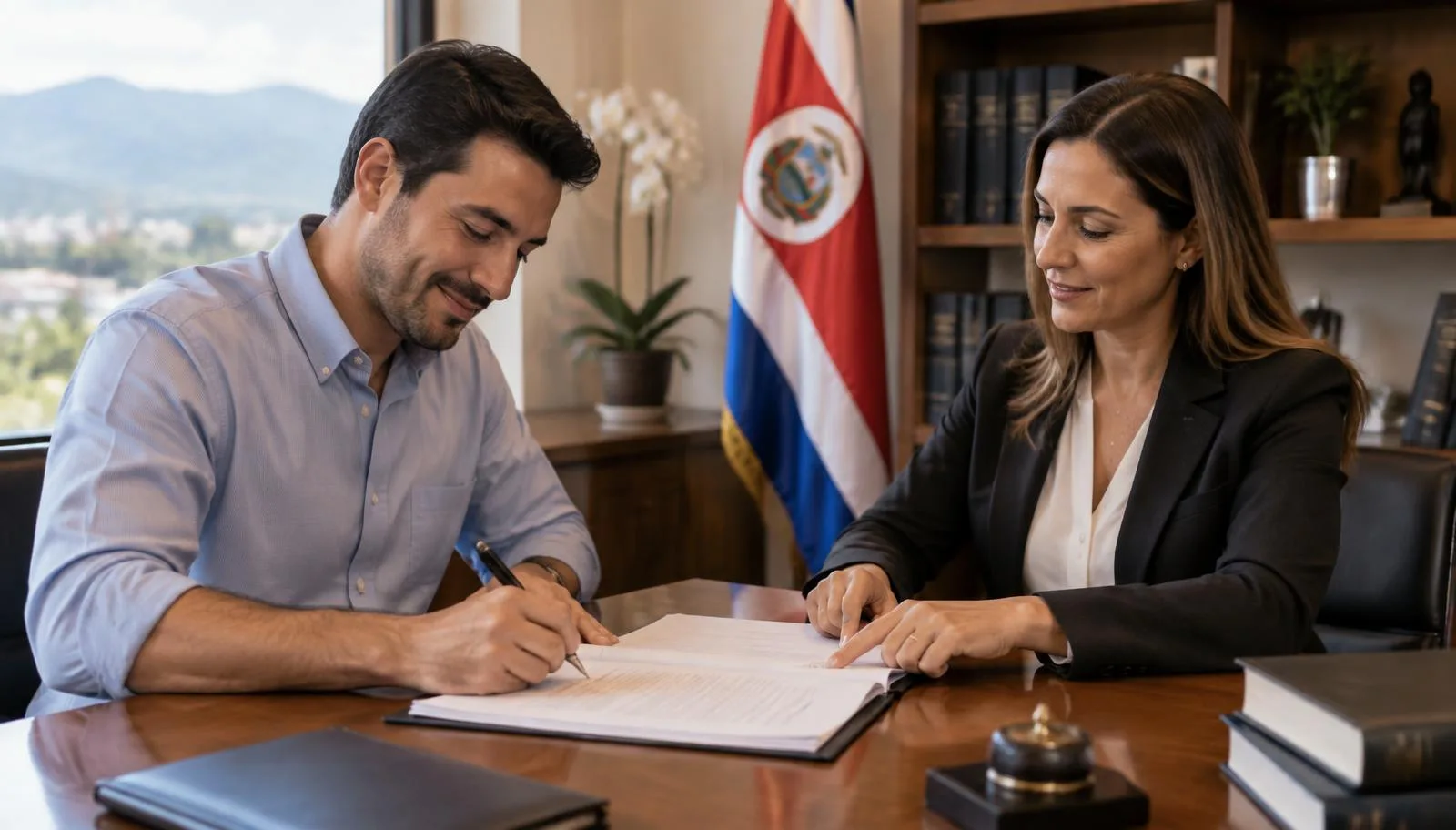
Closing costs in Costa Rica total roughly 3.5% to 4.5% of the purchase price, split between the transfer tax, registry and documentary stamps, and notary fees, as of September 2026. Buyer and seller often split these, but the split is negotiable and should be written into the offer.
| Cost | % of purchase price | What it covers |
|---|---|---|
| Property transfer tax | 1.5% | Government tax on the transfer of title, paid to the tax authority |
| Registry and documentary stamps | 0.7–1% | National Registry filing, municipal and fiscal stamps |
| Notary and legal fees | 1–1.5% | Drafting the deed, due diligence, title search, registration |
| Mortgage registration (financed purchases only) | 0.3–0.5% | Registering the lender''s lien, plus bank appraisal and origination charges |
| Total | 3.5–4.5% (up to ~5% with a mortgage) | All-in cost of closing, excluding ongoing taxes and fees |
Two ongoing costs sit outside closing. Annual property tax is 0.25% of registered value under Costa Rica''s Ministry of Finance rules, and homes above the annual luxury-home threshold pay an additional solidarity tax. Gated communities and condominiums also charge association fees, which can run from $100 to several hundred dollars a month.
Cost of Buying a House in Costa Rica vs. Cost of Living
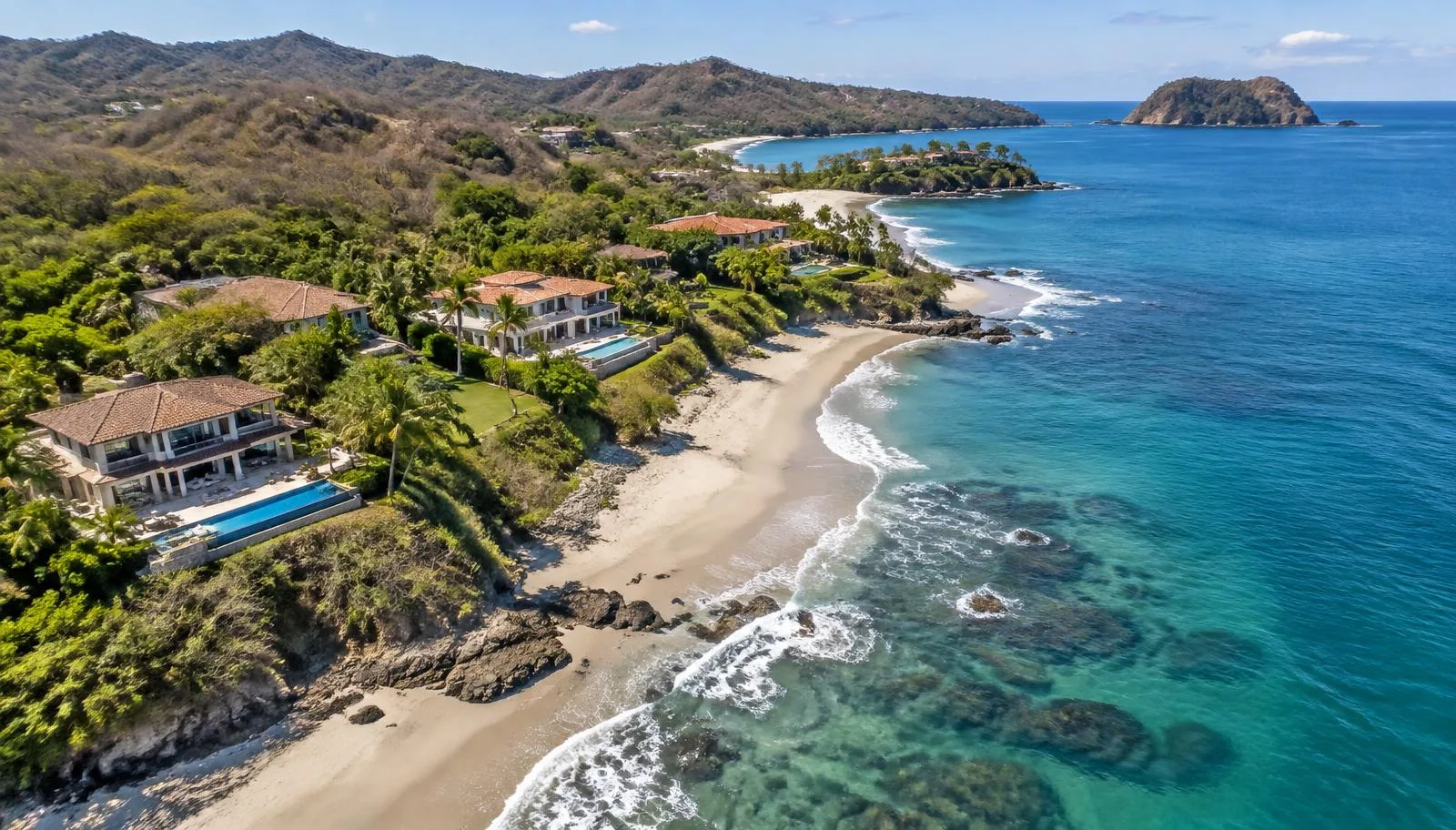
Purchase prices vary sharply by region. Homes in the Central Valley around San José and in the Southern Zone near Dominical cost considerably less than beachfront property in Guanacaste around Tamarindo or on the Central Pacific near Jacó. You can compare what is actually on the market on our Costa Rica real estate listings.
Many expats find buying works out cheaper overall than renting long term, even at a higher mortgage rate than they would pay at home, because day-to-day living costs are so much lower. Our Cost of Living in Costa Rica 2026 guide sets out the monthly numbers, and Renting vs. Buying in Costa Rica runs the comparison directly.
Tips for Buying a House in Costa Rica as an American
- Work with an independent bilingual real estate attorney in Costa Rica — your own, not the seller''s or the agent''s.
- Get a title search and an independent appraisal before you commit to financing.
- Check whether a dollar-denominated loan reduces your currency risk.
- Consider your residency status when choosing financing: residents get higher loan-to-value and longer terms. Our Costa Rica Residency & Pensionado Visa guide explains the routes.
- Look at cross-border lenders as well as local banks.
- Research lenders who specialise in Central American mortgages, and compare their all-in cost against a HELOC at home.
Disclaimer: This guide is for general information and is not financial, legal or tax advice. Rates, fees and lending criteria change and vary by lender. Confirm your situation with a licensed Costa Rican attorney and a qualified lender before committing to a purchase.
Costa Rica Mortgage FAQs
Do I need residency to get a mortgage for a property in Costa Rica?
No. Foreigners can finance a property purchase without residency, but residency gives access to better mortgage terms in Costa Rica, including higher loan-to-value limits and longer repayment periods.
What credit score is needed for Costa Rica property financing?
Costa Rican banks look mainly at documented income and weigh a foreign credit score only lightly, because Costa Rican credit bureaus cannot verify international credit history.
Are Costa Rica mortgages more expensive than in the US for foreign buyers without residency?
Usually yes. Local dollar loans run about 7% to 10% as of September 2026, above typical U.S. rates, though dollar-denominated mortgages narrow the gap and are common among foreign buyers.
Is it generally cheaper to obtain financing from my own country?
In most cases it is. Many buyers use a home-equity line of credit or a cash-out refinance at home, which usually carries a lower rate and a longer term than a Costa Rican mortgage.
What do I do if a Costa Rican bank denies my financing application?
Private and hard money lenders serve the foreign buyer market in Costa Rica and offer quick, flexible approvals at rates of roughly 10% to 14%, and seller financing is a further alternative.
Planning Your Purchase
Getting a mortgage in Costa Rica as a foreigner takes more planning than a domestic purchase, but it is well within reach. Compare local bank terms against a loan from home, budget 3.5% to 4.5% for closing costs on top of the down payment, confirm the currency of the loan, and have an independent Costa Rican attorney review title before any money moves. Do that, and financing becomes the straightforward part of the move.
Planning to cover the payments with rental income? Our guide to renting out your Costa Rica property explains the Airbnb rules, rental income tax and realistic net returns.