Costa Rica Property Taxes: What Owners Actually Pay
By The Costa Rica List Editorial Team — Mon Oct 12 2026
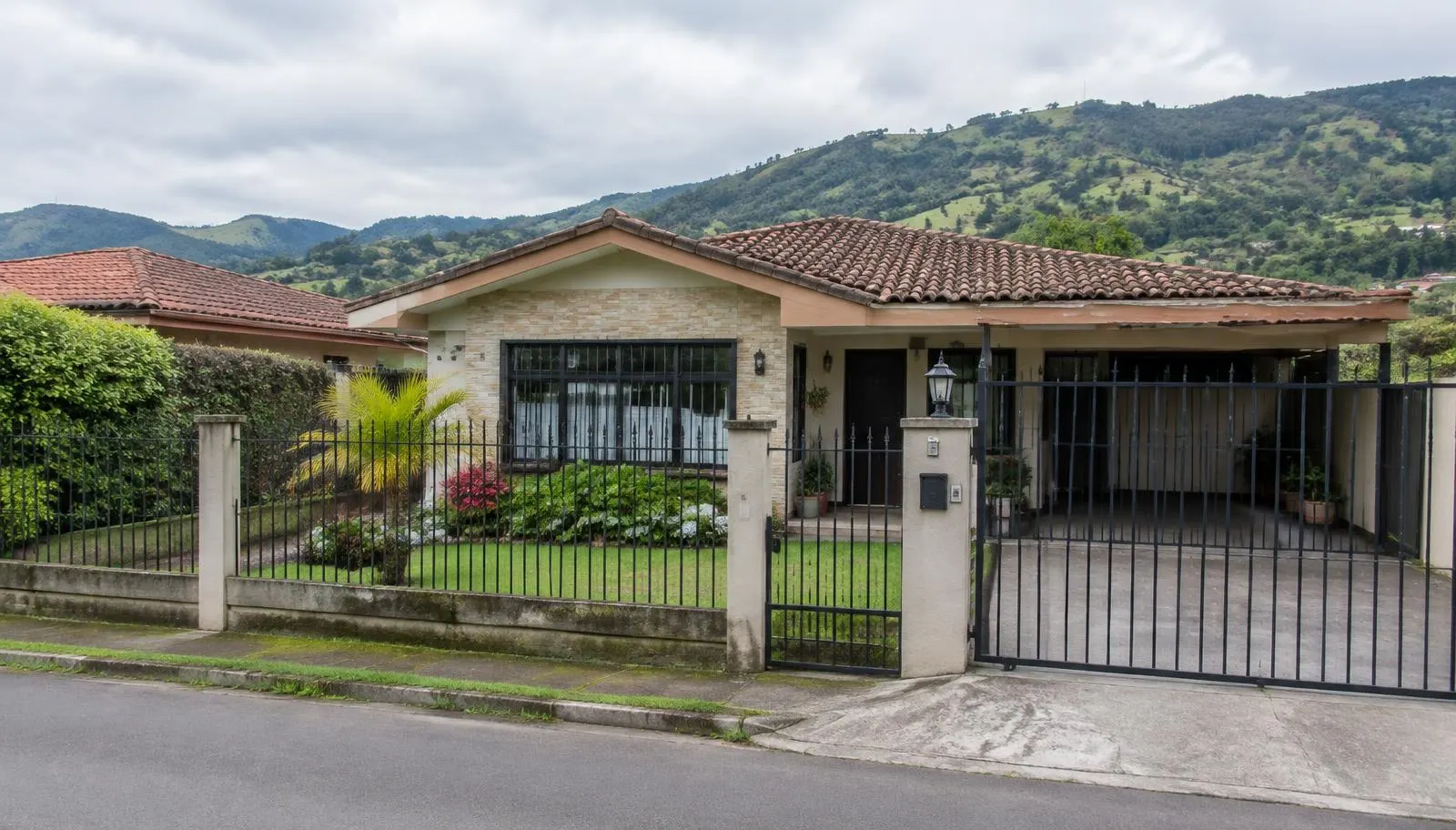
Costa Rica property tax is just 0.25% a year. Learn how the luxury home tax works, what foreigners pay, and what owners actually owe.
Costa Rica has some of the lowest property taxes in the Americas, and the numbers below show it. Every owner pays a flat 0.25% municipal tax, foreigners included. A small group of higher-value homes also pays a national luxury home tax, and owners who rent, sell or hold through a company face three further taxes that most guides leave out. This page covers all five, with each rate sourced and dated.
Published: 12 October 2026 · Last updated: 12 October 2026
Rates and thresholds verified: 12 October 2026, against the Ministerio de Hacienda (Decreto Ejecutivo N.º 45358-H and the 2026 Impuesto Solidario and Personas Jurídicas notices), Ley 7509, Ley 8683, Ley 9428 and Ley 9635. Reviewed every January, when Hacienda sets the new luxury tax threshold.
Quick answer: Costa Rica charges 0.25% of registered value in annual property tax, collected by the municipality, usually quarterly. Foreigners pay exactly the same as residents. A separate luxury home tax applies only to properties whose construction value exceeds a threshold set each year by Hacienda (¢143,000,000 for 2026).
Costa Rica charges 0.25% a year in property tax, among the lowest rates in the Americas.
Still deciding whether to buy at all? Our renting versus buying guide for expats compares the two paths before you commit. If you are ready to look, browse current Costa Rica property listings.
Costa Rica Property Taxes at a Glance
| Tax | Who pays | Rate | Collected by | How often |
|---|---|---|---|---|
| Municipal property tax (Ley 7509) | Every owner, foreigners and locals alike | 0.25% of registered value | Local municipality | Annual, usually paid quarterly |
| Luxury home tax (Impuesto Solidario, Ley 8683) | Owners of homes whose construction value exceeds ¢143,000,000 (2026) | 0.25% to 0.55%, progressive, on the total property value | Ministerio de Hacienda | Paid annually by 15 January; declared every three years |
| Corporate tax (Impuesto a las Personas Jurídicas, Ley 9428) | Every registered company, trading or not | ¢69,330 to ¢231,100 a year (2026) | Ministerio de Hacienda | Annual, due at the start of each year |
| Rental income tax (Ley 9635) | Owners who rent out property | 15% after a 15% automatic deduction (12.75% of gross rent) | Ministerio de Hacienda | Declared and paid monthly |
| Capital gains tax on sale (Ley 9635) | Sellers who make a gain, except on a primary residence | 15% of the gain, or 2.25% of the sale price for some pre-2019 purchases | Ministerio de Hacienda | Once, on sale |
This table is general information, not tax advice. Your own position depends on how you hold the property and how you use it, so confirm it with a licensed accountant or Costa Rican property attorney before you buy, rent or sell.
The Annual Municipal Property Tax: 0.25%
Costa Rica's annual property tax, the impuesto sobre bienes inmuebles, is 0.25% of the property's registered value, set by Article 23 of the Ley de Impuesto sobre Bienes Inmuebles (Ley 7509). It is collected by the municipality where the property sits, not by the national government, and it covers both the land and the buildings on it. Most municipalities bill it quarterly, and many give a small discount for paying the full year in advance. The Municipalidad de San José, like every municipality, publishes its payment options online.
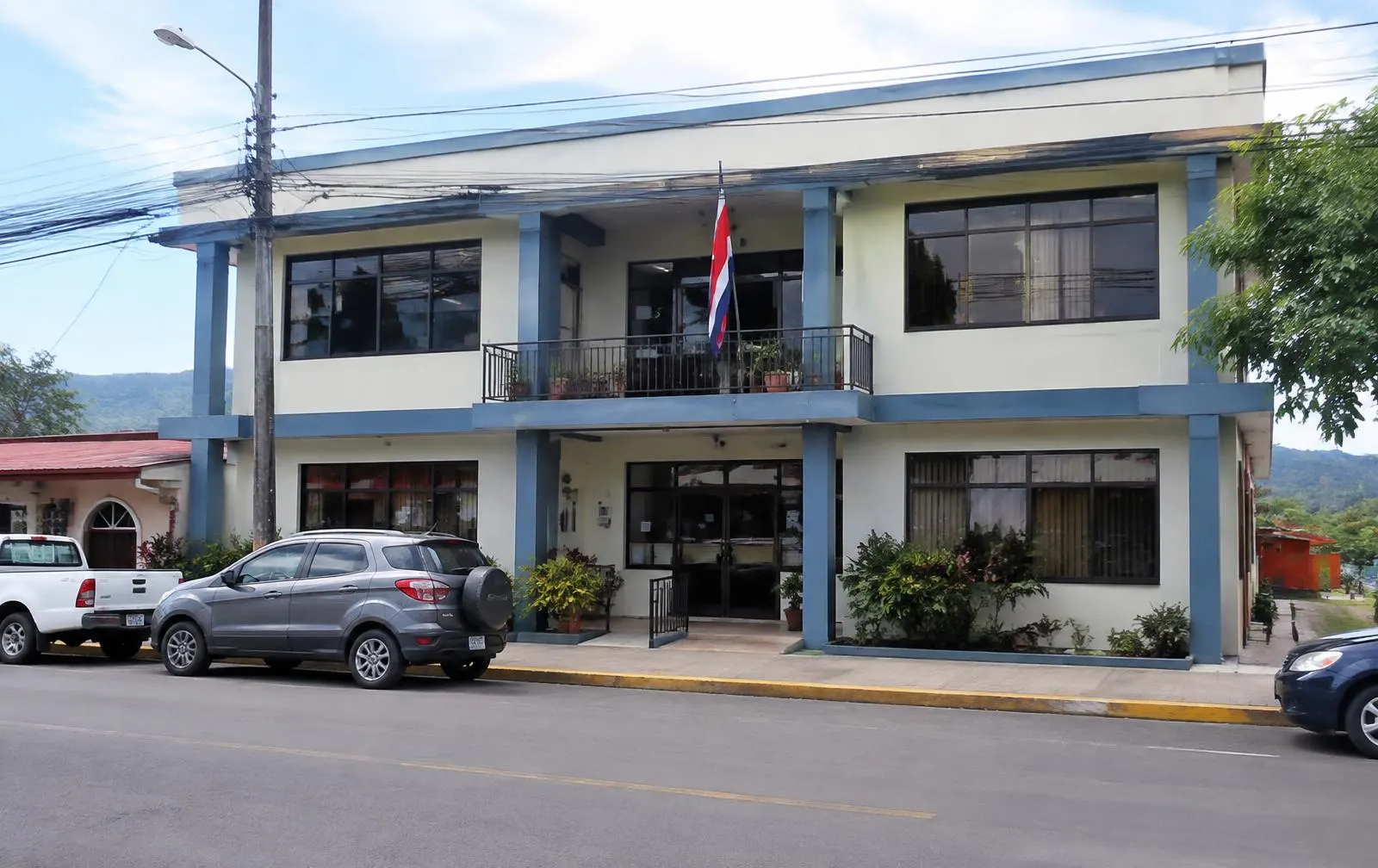
Property tax is collected locally, by the municipality where the property sits.
What You Pay at Different Property Values
Every US$100,000 of registered value costs about US$250 a year. Registered value is often lower than market value, so many owners pay less than these figures suggest. To see how this fits a full monthly budget, our Costa Rica cost of living guide puts property tax alongside utilities, insurance and food.
- US$300,000 registered value: about US$750 a year
- US$500,000 registered value: about US$1,250 a year
- US$1,000,000 registered value: about US$2,500 a year
Property Tax in Costa Rica for Foreigners
Foreigners pay exactly the same property tax as Costa Ricans. There is no separate rate, no surcharge and no residency requirement. A buyer from the United States, Canada or Europe pays 0.25%, the same as a Costa Rican citizen.
Holding Title Personally or Through a Corporation
Foreign buyers can hold title in their own name or through a Costa Rican company, usually a sociedad anónima (S.A.) or a sociedad de responsabilidad limitada (S.R.L.). The municipal tax is the same either way. Holding through a company adds a real recurring cost, the Impuesto a las Personas Jurídicas created by Ley 9428.
The tax applies to every company on the National Registry, whether or not it trades. For 2026 it is set as a share of the ¢462,200 base salary, according to the Ministerio de Hacienda's 2026 notice:
- Companies not registered for income tax, typical of a simple holding company: 15%, or ¢69,330 (about US$140)
- Companies registered for income tax with no activity, or with gross income under 120 base salaries: 25%, or ¢115,550 (about US$230)
- Gross income between 120 and 280 base salaries: 30%, or ¢138,660
- Gross income above 280 base salaries: 50%, or ¢231,100
It catches foreign owners out every year because nobody sends a bill. Unpaid amounts collect interest and penalties, and a company that misses three consecutive years can be dissolved, which puts the title of the property it holds at risk. Companies also file an annual beneficial ownership declaration with the Banco Central. Ask a property attorney to confirm the current corporate fees and filings before you choose a structure. If residency is part of your plan, our guide to moving to Costa Rica covers the Inversionista route, which is linked to property investment.
The Luxury Home Tax Explained
The luxury home tax is formally the Impuesto Solidario para el Fortalecimiento de Programas de Vivienda. It was created by Ley 8683 of 19 November 2008 and has been in force since 1 October 2009. It is often dated to 2018, but that year belongs to the separate tax reform law, Ley 9635, which created the rental income and capital gains rules described below. The luxury tax is a national tax collected by Hacienda, separate from and in addition to the municipal tax.

The luxury home tax reaches only a small group of higher-value properties.
Who Actually Has to Pay It
It applies to residential property used as a main home, an occasional home or a holiday home, held by individuals or companies, foreign or Costa Rican. Commercial property does not pay it. Most homes in Costa Rica never reach the threshold.
How the Tax Is Calculated
This is the most misunderstood part of the tax. There are two separate steps, and each uses a different value.
Step 1: does the property qualify? The test uses only the value of the construction and its fixed and permanent installations, such as the house, pool and outbuildings. Land is left out of this test. If the construction value is at or below the threshold, no luxury tax is due, however valuable the land is.
Step 2: what is the tax charged on? Once a property qualifies, the tax is calculated on the property's total value, including the land. It is not charged only on the amount above the threshold. That total is then taxed through seven progressive brackets, each rate applying to the slice of value inside its band:
| Slice of total property value | Rate |
|---|---|
| Up to ¢359,000,000 | 0.25% |
| ¢359,000,000 to ¢720,000,000 | 0.30% |
| ¢720,000,000 to ¢1,081,000,000 | 0.35% |
| ¢1,081,000,000 to ¢1,443,000,000 | 0.40% |
| ¢1,443,000,000 to ¢1,800,000,000 | 0.45% |
| ¢1,800,000,000 to ¢2,162,000,000 | 0.50% |
| Above ¢2,162,000,000 | 0.55% |
Here is an example. A house with ¢150,000,000 of construction on ¢100,000,000 of land qualifies, because its construction value is above ¢143,000,000. The tax is then charged on the full ¢250,000,000, at 0.25%, which comes to ¢625,000 a year. A house with ¢120,000,000 of construction on ¢400,000,000 of oceanfront land pays no luxury tax at all, because its construction does not pass the qualifying test.
The owner self-assesses on form D-174 in Hacienda's TRIBU-CR virtual office (OVi). The declaration is filed every three years, or sooner if the property changes significantly, for example after an extension. The tax is paid every year by 15 January. Late filing or payment attracts the penalties and interest set out in the Tax Code, including a late-payment surcharge of 1% a month, capped at 20%.
The Current Threshold
For the 2026 tax year, the threshold is ¢143,000,000 of construction value. That is about US$286,000 at an exchange rate of ¢500 to the dollar, the approximate Banco Central reference rate used for every dollar conversion on this page. The threshold is set in colones by Decreto Ejecutivo N.º 45358-H, published in La Gaceta N.º 239 on 19 December 2025, and confirmed in Hacienda's 2026 Impuesto Solidario notice. Hacienda updates it every year in line with inflation, and the dollar equivalent moves with the exchange rate, so check the colones figure for the year you are in.
Municipal Tax vs Luxury Home Tax: The Key Differences
The two taxes work differently. Here is how.
| Feature | Municipal property tax | Luxury home tax |
|---|---|---|
| Who collects it | Local municipality | Hacienda (national government) |
| What it covers | Land and buildings | Construction value decides whether it applies; once it does, tax is charged on the total value, land included |
| Who pays | Every property owner | Owners of homes whose construction exceeds ¢143,000,000 (2026) |
| Rate structure | One flat rate, 0.25% | Progressive tiers, 0.25% to 0.55% |
| Applies to vacant land | Yes | No, because land with no construction cannot pass the qualifying test. Land under a qualifying home is taxed. |
| Same for foreigners and locals | Yes | Yes |
In short, every owner pays the municipal tax. The luxury tax reaches only a small group of high-value homes, but once a home qualifies, its land is taxed too.
Tax on Rental Income
Rental income from Costa Rican property is taxable, whether it comes from long-term tenants or holiday guests. Since the 2018 tax reform (Ley 9635, in force from 1 July 2019), owners have two options, as set out by the Ministerio de Hacienda:
- Capital income regime (the default for individual owners). A flat 15% rate applies to gross rent after an automatic 15% deduction for expenses, so the effective rate is 12.75% of gross rent. You declare and pay monthly, and you cannot deduct actual expenses.
- Business income regime. Owners who run the rental as a business, typically with at least one employee, can opt to be taxed on net profit at the progressive income tax rates. This lets you deduct real costs such as the municipal tax, maintenance, management fees and depreciation.
Short-term rentals also charge 13% VAT on the nightly rate, and holiday rentals must register with the Costa Rica Tourism Board (ICT) under Ley 9742. Low property tax still helps landlords, because the carrying cost is small, but the net yield must account for income tax. Our guide to Costa Rica mortgages for foreigners covers financing and the other carrying costs that affect returns.
Capital Gains Tax When You Sell
Ley 9635 introduced a capital gains tax on property from 1 July 2019. The rules are:
- Standard rate: 15% of the gain, meaning the sale price minus the purchase price and documented improvements.
- Alternative calculation: for property bought before 1 July 2019, the seller can choose, once per property, to pay 2.25% of the gross sale price instead. This helps when the purchase price or improvement records are hard to prove.
- Primary residence: the sale of your vivienda habitual, the home you actually live in, is exempt.
The tax is declared and paid within the month after the sale. Keep every purchase deed, invoice and permit from day one, because they set the cost base that reduces your gain.
Capital gains treatment depends on your residency, how title is held and how the property has been used. This section is general information, not tax advice. Confirm your position with a licensed accountant or Costa Rican attorney before you sell.
One-Off Costs at Purchase
Property tax is a running cost. At closing, a buyer also pays government transfer charges, which together usually come to between 1 and 3% of the purchase price, and about 2.5% for a typical purchase. That figure includes the 1.5% transfer tax and the National Registry fees and stamps. It excludes the notary's fee (about 1.25% plus VAT), attorney and due diligence fees, escrow charges and any mortgage registration costs.
Add those, and total closing costs come to about 3.5 to 5% of the price. That is the all-in figure used in our step-by-step guide to buying property in Costa Rica. The two figures measure different things, so they do not conflict.
How to Keep Your Tax Bill Accurate
Your tax is tied to the value registered with the municipality. These habits keep it correct:

Declared values should be updated every five years and after major renovations.
- File a property declaration every five years. Ley 7509 asks owners to declare their property's value at least every five years. If you do not, the municipality can assess the value itself, often higher than you would declare, and can fine you for not filing.
- Update the value after major works. An extension, a pool or a rebuild changes the registered value and may push a home over the luxury tax threshold. If you are planning work, our directories of construction companies in Costa Rica and Costa Rican architects can help you scope it with the declaration in mind.
- Pay on time. Late municipal payments collect interest, and unpaid property tax becomes a legal charge on the property itself. In serious cases the municipality can pursue collection against the property.
- Keep receipts. Payment certificates prove you are up to date, and a buyer's attorney will ask for them when you sell.
- Run a registry check before buying. Unpaid property tax stays with the property, not the previous owner. Have a real estate attorney run a registry and municipal tax check before closing, so you do not inherit someone else's debt.
How Costa Rica Compares
The claim that Costa Rica's property taxes are among the most attractive in the Americas is easy to test. Typical annual rates on residential property:
| Country | Typical annual property tax rate |
|---|---|
| Costa Rica | 0.25% nationwide (plus 0.25% to 0.55% luxury tax on qualifying homes) |
| United States | About 0.3% to 2.2% depending on state; national average close to 0.9% |
| Canada | About 0.5% to 1.5% depending on municipality |
| Mexico | About 0.1% to 0.3% (the predial), set by each municipality |
| Panama | 0% to 1%, progressive; primary homes exempt up to US$120,000 |
Costa Rica's flat 0.25% is below the typical rate in the United States and Canada and well below the national average in each. Only Mexico's municipal predial is regularly lower. Unlike Panama's, Costa Rica's rate does not rise with value until a home crosses the luxury threshold.
Costa Rica Property Tax FAQs
What is the Costa Rica property tax rate?
The municipal property tax rate is 0.25% of the property's registered value each year, under Ley 7509. It is the same in every municipality.
Do foreigners pay more property tax in Costa Rica?
No. Foreigners pay the same 0.25% as Costa Rican citizens, with no surcharge and no residency requirement.
What is the Costa Rica luxury home tax?
It is a national tax created by Ley 8683 of 2008. It applies to homes whose construction value exceeds a yearly threshold, ¢143,000,000 for 2026. Qualifying homes pay progressive rates from 0.25% to 0.55% on their total value, and the tax is paid to Hacienda by 15 January each year.
Does the luxury home tax apply to land?
Land does not count toward the qualifying test, which uses only construction value. Once a home qualifies, the tax is charged on the total property value, land included. Vacant land with no home never pays it.
How often is property tax paid in Costa Rica?
Municipal property tax is usually billed quarterly, and most municipalities let you pay the full year in advance. The luxury home tax is paid once a year, by 15 January.
Can I find out the property tax before I buy?
Yes. During due diligence, an attorney can obtain the registered value and a municipal certificate showing whether the tax is paid up. From those, the attorney can calculate your future annual bill.
What happens if the previous owner left unpaid property tax?
The debt stays with the property, not the person. Unpaid municipal tax is a legal charge on the property, so a buyer who does not check can inherit it. A municipal tax certificate and registry search before closing prevent this, and unpaid amounts are normally settled from the seller's proceeds.
Is property tax deductible against rental income?
Only under the business income regime, where actual expenses are deductible. Under the default capital income regime, the 15% automatic deduction replaces all actual expenses, so municipal tax cannot be deducted separately.
Before You Buy, Check the Numbers
For most owners, Costa Rican property tax is a small, predictable bill: 0.25% a year, paid to the local municipality. The surprises come from the other taxes: the luxury tax on higher-value homes, which also taxes the land once a home qualifies, the annual corporate tax on holding companies, and income tax on rent and gains. Ask your Costa Rica real estate lawyer to model all five before you sign. Then use our guide to the purchase process and due diligence to plan the rest of your purchase.
Read next
- Buying Property in Costa Rica: A Guide for Foreigners: the purchase process, the maritime zone, escrow and closing costs, step by step.
- Cost of Living in Costa Rica: realistic monthly budgets, including housing, utilities and the running costs of ownership.
Written by the editorial team at The Costa Rica List.