Above the Canopy: Exploring the Cloud Forests of Monteverde
By The Costa Rica List Editorial — Sun May 24 2026
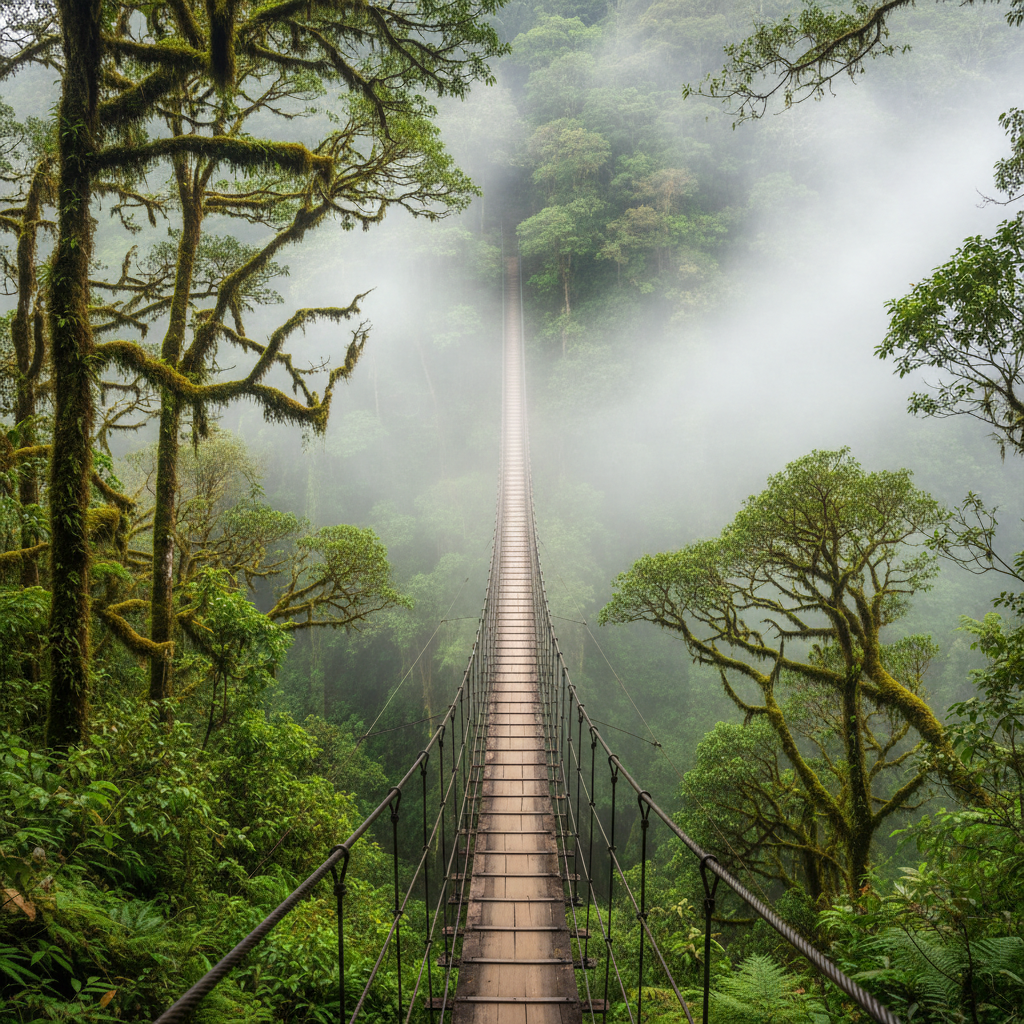
Explore Monteverde, Costa Rica's premier cloud forest. Discover its biodiversity, the Quaker history of conservation & the unique flora of this misty highland.
In the high altitudes of the Tilarán Mountain Range, where the trade winds from the Caribbean clash with the continental divide, a permanent veil of mist blankets a landscape unlike any other on earth. This is Monteverde, Costa Rica’s crown jewel of biodiversity and perhaps the most famous cloud forest in the world. While rainforests receive their moisture from heavy rainfall, cloud forests exist in a state of nearly constant immersion within low-hanging clouds, creating an ethereal, dripping environment where life grows upon life. For expats, researchers, and travelers, Monteverde serves as a living laboratory and a testament to the nation’s commitment to environmental preservation. The Science Behind the Mist What makes Monteverde distinct from the tropical dry forests of Guanacaste or the lowland jungles of Manuel Antonio is its specific microclimate. As moist air is pushed up the mountain slopes, it cools and condenses, forming a consistent layer of fog and mist. This "horizontal precipitation" provides a steady supply of moisture to the plants, even during the dry season. This unique weather pattern supports a staggering amount of flora; it is estimated that over 3,000 species of plants reside here, including the highest concentration of orchids on the planet. Walking through the forest, the visual density is overwhelming. Every square inch of the giant hardwood trees is covered in "epiphytes"—plants like mosses, ferns, bromeliads, and orchids that grow on other plants rather than in the soil. These hanging gardens create a complex vertical ecosystem that allows creatures to live their entire lives hundreds of feet above the forest floor without ever touching the ground. A Sanctuary for the Resplendent Quetzal For birdwatchers, Monteverde is synonymous with the Resplendent Quetzal. Once considered sacred by the Maya and Aztecs, this emerald-green bird with its long, flowing tail feathers is the "holy grail" of Central American avian life. While elusive in other regions, the high-altitude cloud forests of Monteverde provide the perfect nesting grounds, particularly during the breeding season between March and July when they feed on the fruit of the wild avocado tree. Beyond the Quetzal, the region is home to the Three-wattled Bellbird, known for its distinctive metallic "bonk" sound that echoes through the canopy. The biodiversity statistics are staggering: Monteverde hosts over 400 species of birds, 100 species of mammals, and thousands of insect species. It is also one of the few places where you might catch a glimpse of the elusive oncilla (a small spotted cat) or the endangered Baird’s Tapir. The Quaker Legacy and Conservation History The story of Monteverde’s preservation is as much about human history as it is about biology. In the early 1950s, a group of Quaker families from the United States migrated to the region, seeking a peaceful life away from the military draft. They began dairy farming—producing the now-famous Monteverde cheese—but they also recognized the necessity of protecting the water source for their valley. They set aside a significant portion of the primary forest, which eventually became the nucleus of the Monteverde Cloud Forest Biological Reserve. This early grassroots conservation effort evolved into a global model. Today, the region is a patchwork of protected areas, including the Monteverde Cloud Forest Reserve , the Santa Elena Cloud Forest Reserve , and the Children's Eternal Rainforest (the largest private reserve in Costa Rica, funded by donations from children around the world). This community-led approach has allowed Monteverde to resist the over-development seen in other tourist hubs, maintaining a rustic, educational atmosphere. Sustainable Tourism and Adventure Monteverde has become a premier destination for "soft adventure" and eco-tourism. It was here that the original canopy tours were popularized, allowing visitors to zip-line through the mist or walk across massive hanging bridges. These bridges offer a unique perspective, placing visitors eye-to-eye with the canopy’s inhabitants and providing a safe way to observe the fragile ecosystem without disturbing the forest floor. Night tours have also become a staple of the Monteverde experience. As the sun sets, the cloud forest transforms. Night-active creatures such as sloths, tarantulas, red-eyed tree frogs, and sleeping toucans become the focus, offering a starkly different perspective on the forest’s rhythms. For those interested in sustainable agriculture, coffee and chocolate tours in the surrounding hills demonstrate how these vital crops can be grown in harmony with the forest through shade-grown techniques. Living in the Clouds: The Expat Perspective The lifestyle in Monteverde is distinct from the "Pura Vida" beach culture of the coast. Life here is defined by cooler temperatures, wood-burning stoves, and a close-knit community focused on arts, education, and sustainability. The town of Santa Elena serves as the commercial hub, offering organic markets, cozy cafes, and a surprising variety of international cuisine, fueled by the steady stream of researchers and eco-volunteers. However, living in the cloud forest comes with its challenges. The humidity is constant, requiring specialized home maintenance to prevent mold, and the winding mountain roads can be rugged. Yet, for those who prioritize nature over nightlife, the reward is an unparalleled connection to one of the most fragile and beautiful environments on Earth. Development is strictly monitored, ensuring that the "green lung" of the mountain remains intact for future generations. The Threat of Climate Change Despite its protected status, Monteverde faces a significant threat: climate change. As global temperatures rise, the "cloud base" is lifting. The mist that the forest relies on is moving higher up the mountain, potentially leaving the lower sections of the reserve too dry to support cloud forest species. This phenomenon was famously linked to the extinction of the Golden Toad, which was last seen in Monteverde in 1989. Modern conservation efforts now focus on creating "biological corridors," allowing species to migrate to different altitudes and regions as the climate shifts. Monteverde stands as a symbol of what is possible when a community values its natural heritage above short-term profit. It remains a place of mystery and profound beauty, where the line between the earth and the sky is perpetually blurred. Whether you are a scientist studying mosses or a traveler seeking a moment of quiet reflection among the ancient trees, the Monteverde Cloud Forest offers a transformative look at the intricate web of life. As Costa Rica continues to lead the world in green initiatives, Monteverde remains its spiritual heart. It is a reminder that some of the world’s greatest treasures are not built, but grown, and that our greatest responsibility is to ensure they remain shrouded in mist for centuries to come. ",excerpt: